Small patches of mold on the ceiling, under about 1 square meter, are usually safe to clean yourself with white vinegar or detergent, a P2 mask, and good ventilation. Call a professional if the patch is bigger, tied to a flood, spreading through a roof cavity, or anyone in the house has asthma or a weak immune system. Before you touch anything, open a window and avoid dry brushing or mixing cleaning chemicals.
TL;DR:
- Keeping indoor relative humidity below 60% and fixing leaks or insulation gaps can prevent mold growth on ceilings.
- Small patches under 1 square meter can often be cleaned by DIY methods using vinegar or household detergent, with proper safety precautions.
- Larger areas, mold spreading across multiple rooms, or growth inside roof cavities require professional remediation for safe and effective removal.
- Mold indoors is particularly risky for people with asthma, allergies, or weakened immune systems, warranting extra caution and possibly professional assessment.
- Routine maintenance like cleaning gutters, venting bathrooms outside, and improving insulation can significantly reduce moisture that causes ceiling mold.
Table of Contents
- What Causes Mold on Ceilings, and Who’s at Risk?
- How Big Is the Problem, and Should You Handle It Yourself?
- How to Remove Mold From a Ceiling Yourself
- Stopping Ceiling Mold From Coming Back
- When a Ceiling Mold Problem Needs a Professional
- Why We Take Ceiling Mold Seriously
- Ready for a Professional Mold Inspection?
- Sources
- FAQ
What Causes Mold on Ceilings, and Who’s at Risk?
Ceiling mold almost always traces back to one thing: moisture meeting a cold surface. Steam from a shower, cooking, or even breathing condenses on a ceiling that’s colder than the air around it, and if that dampness lingers, mold colonizes within a couple of days. A slow roof leak, a poorly sealed bathroom extractor venting straight into the roof space instead of outside, or a gap in ceiling insulation can each create the exact conditions mold needs.
Surface humidity above roughly 70 to 80% for 48 to 72 hours is often enough to kick off growth, even if the room itself feels dry, since a thermal camera can find pockets of trapped moisture that a hygrometer on the wall would miss entirely.
Mold likes to hide where you’re not looking:
- Behind cornices and in the corners where ceiling meets wall
- Inside roof cavities and around insulation batts
- Along ceiling joints in bathrooms and laundries
- Around light fittings and exhaust fan housings
A musty smell is often the first clue, even before you see a stain. Health authorities note that mold exposure can trigger nasal congestion, coughing, and wheeze, and it tends to worsen existing asthma and allergies in people who already have them. Anyone with a chronic lung condition or a weakened immune system faces higher risk from the same exposure that barely bothers everyone else. You don’t need a lab to tell you which species you’re dealing with. If you can see it or smell it, the guidance is the same: clean it and fix the moisture, according to the Better Health Channel.
How Big Is the Problem, and Should You Handle It Yourself?
Size is the first thing to check, and it’s the single biggest factor in deciding whether this is a weekend job or a phone call. Guidance from WA Health sets roughly 1 square meter as the practical line between DIY cleaning and professional remediation.
Before you grab a cloth, run through this:
- Measure the visible patch. Small, contained patches on a single ceiling can generally be cleaned by oneself.
- Ask if the area was recently flooded or soaked for more than a day. If materials remained wet for a day or two or longer, consider that mold growth may be extensive and professional remediation is advised.
- Check whether the growth spans multiple rooms or seems to be feeding from inside a roof cavity or HVAC duct. That points to a moisture source you can’t see or fix from a stepladder.
- Consider who lives in the house. If anyone has asthma, a lung condition, or a compromised immune system, lean toward calling a pro even for a smaller patch.
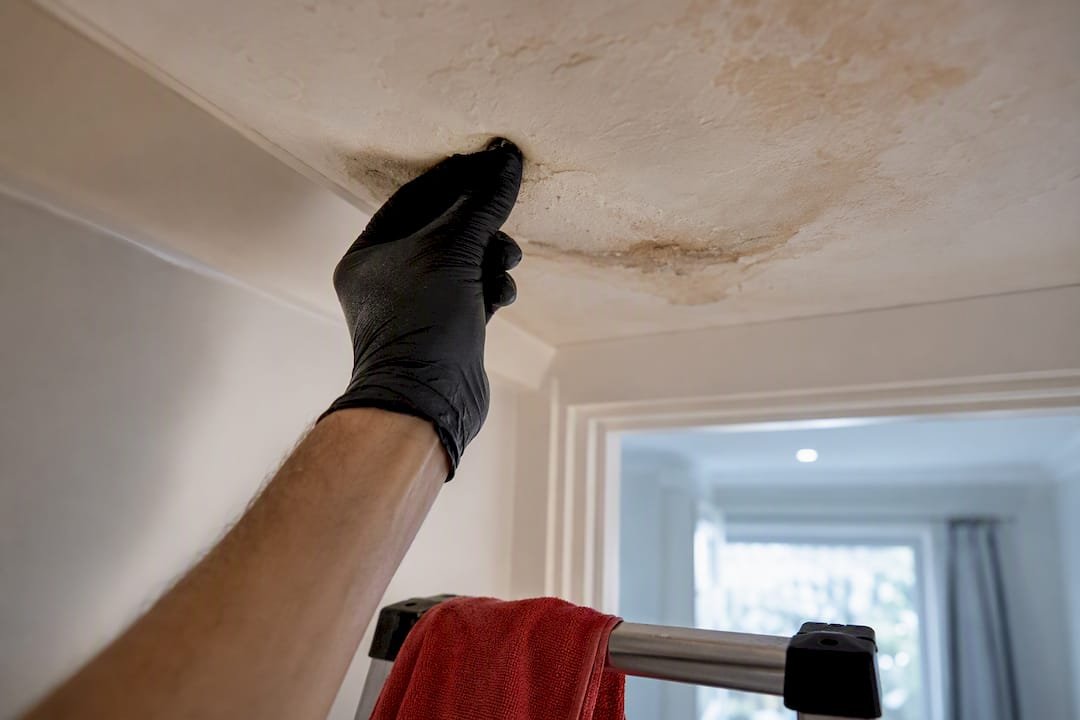
Do a quick inspection before you commit to cleaning: look for water stains, soft or bubbling plaster, and peeling paint nearby, since these signal an active leak rather than old condensation.
Pro Tip: Press gently on any stained ceiling patch with a gloved finger. If it feels soft or spongy, stop. That’s a sign of a wet plasterboard, and scrubbing it will do more damage than good.
How to Remove Mold From a Ceiling Yourself
Once you’ve confirmed it’s a small, contained patch, the job is straightforward, but the technique matters more than whatever product sits under your sink.
Preparation:
- Ventilate the room fully, open windows, and if you can, close the vents leading to that room so spores don’t travel through the house.
- Cover furniture and flooring below with a drop sheet.
- Put on a P2 mask, safety glasses, gloves, and old clothes or disposable overalls you don’t mind tossing out.
Cleaning:
Skip bleach on plasterboard. Australian guidance recommends white vinegar or household detergent instead, because bleach tends to bleach the surface color without penetrating the porous material underneath, so the mold often returns within weeks even though the stain looks gone. Bleach works better on non-porous, sealed surfaces, but never mix it with vinegar, ammonia, or any other cleaner. That combination produces dangerous fumes.
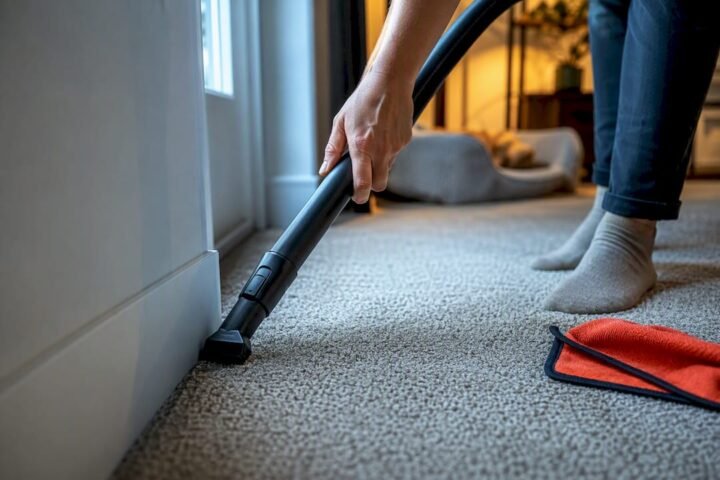
Damp-wipe the area with a microfiber cloth rather than a dry brush, which just flings spores into the air you’re breathing. If you have access to a vacuum with a genuine HEPA filter, run it over the area before and after wiping. A standard vacuum without that filtration can spread spores instead of trapping them.
Professionals working a small mold job rarely reuse the same cloth twice. They work in sections, wiping with one microfiber square, then binning it before moving to the next patch. That single habit does more to stop regrowth than any specific cleaning product.
Disposal and drying:
Place used cloths and disposable materials in sealed bags before disposal to prevent spore spread. Wash reusable clothing separately on a hot cycle. Rinse the cleaned area, then get it fully dry within 48 hours using a fan or open window. Scrubbing is what actually removes mold from hard surfaces; heavily soaked porous materials sometimes need replacing rather than cleaning.
Check the spot again after a week or two. If discoloration returns in the same place, the surface is fine but the moisture behind it isn’t, and that’s your cue to look at the cause rather than clean the same patch a second time.
Stopping Ceiling Mold From Coming Back
Cleaning the stain buys you a few weeks. Fixing the moisture source buys you years. Those are two very different jobs, and skipping the second one is why so many households end up scrubbing the same ceiling corner every few months.
Start with the obvious fixes:
- Repair any roof or plumbing leak, even a slow one, before it causes a second stain.
- Clear gutters so water isn’t backing up under roof sheeting.
- Confirm bathroom and kitchen extractor fans vent outside the building, not into the roof cavity, which just relocates the moisture instead of removing it.
- Dry laundry outside when you can, since indoor drying racks pump a surprising amount of moisture into the air.
Insulation gaps deserve more attention than most people give them. A thin or missing strip of insulation at the ceiling to wall junction creates a cold spot that condensation targets specifically, which is why mold so often traces the perimeter of a ceiling rather than the middle. Improving insulation there raises the surface temperature enough that condensation stops forming in the first place.
Aim to keep indoor relative humidity in the 40 to 60% range where practical. A dehumidifier helps in poorly ventilated rooms, and a correctly sized extract fan does more than a cheap one that moves too little air. If a bathroom renovation is on your list anyway, upgrading ventilation during the work, something a contractor like Elite Touch Renovations can handle alongside a powder room refresh, solves the problem at the source instead of patching around it.
Pro Tip: Run your bathroom exhaust fan for 15 to 20 minutes after every shower, not just during it. Most of the condensation forms after the water’s already off, while steam is still settling on cold surfaces.
Add a seasonal check to your routine: gutters, roof flashing, and extractor seals, twice a year, catches most problems before they reach the ceiling.
When a Ceiling Mold Problem Needs a Professional
Some jobs are bigger than a bucket of vinegar and a Saturday afternoon. Call in a remediation team when you’re dealing with any of the following:
- A patch larger than 1 square meter, or mold spread across more than one room
- Recent flooding or a leak that soaked materials for more than a day or two
- Growth inside a roof cavity, wall cavity, or HVAC system you can’t safely access
- Anyone in the household with asthma, a chronic lung condition, or a compromised immune system
A proper remediation job looks different from a DIY clean. Technicians contain the area to stop spores traveling through the house, diagnose exactly where the moisture is coming from, remove and replace any damaged plasterboard or insulation, dry the space properly, and run a clearance check before calling it done.
Before hiring anyone, ask about their license and insurance, the specific method they’ll use on your ceiling type, an estimated timeline, and whether the work carries any warranty. Timelines and costs vary a lot depending on the extent of the damage, so treat any quote given without an inspection as a rough guess at best.
Why We Take Ceiling Mold Seriously
Pest management professionals have worked in many homes over years, and mold treatment often accompanies moisture diagnostics as a common service call, along with pest issues that share the same root cause: unresolved dampness. Licensed technicians generally treat each job with a safety-first mindset, whether it’s a ceiling patch or a termite inspection.
— navin
Ready for a Professional Mold Inspection?
If the patch on your ceiling is bigger than a dinner plate, keeps coming back, or you’re just not sure what’s happening above that stain, a proper inspection beats another round of scrubbing and hoping. Licensed technicians and modern detection tools, including thermal imaging, can help find moisture problems hiding behind plasterboard and inside roof cavities before they turn into a bigger repair bill.

Our team handles mold treatment, moisture-source diagnosis, and coordination with repair trades so you’re not left guessing what to fix first. Services are offered across Canberra and surrounding suburbs, with experience servicing a variety of homes over many years. If you’re weighing DIY against getting it looked at properly, our general pest control and property protection services page is the place to start, or reach out directly for a quote on an inspection.
Sources
- ACT — Mould and condensation fact sheet
- WA Guidelines — Indoor mould: health risk assessment and management
This article is general information, not a substitute for advice from a qualified doctor. Consult a qualified healthcare professional about your own circumstances before acting on anything here.
FAQ
Is Mold on the Ceiling Harmful?
Yes, for some people. It can trigger nasal congestion, coughing, and wheeze, and it tends to worsen asthma and allergies, with higher risk for anyone with a compromised immune system or chronic lung condition.
Why Is Mold Forming on My Ceiling?
Condensation on a cold ceiling surface, a slow roof or plumbing leak, an extractor fan venting into the roof space instead of outside, or a gap in insulation are the usual causes.
What Kills Mold Permanently on a Ceiling?
Nothing “kills” it permanently unless you fix the moisture source. White vinegar or detergent, combined with thorough scrubbing and fast drying, removes the visible mold, but it returns if the ceiling stays damp.
What Should I Do if There’s Mold on My Ceiling?
Ventilate the room, put on a P2 mask, gloves, and eye protection, and clean patches under 1 square meter with vinegar or detergent and a microfiber cloth. For anything larger, flood-related, or in a household with asthma or immune concerns, call a professional remediation service instead.