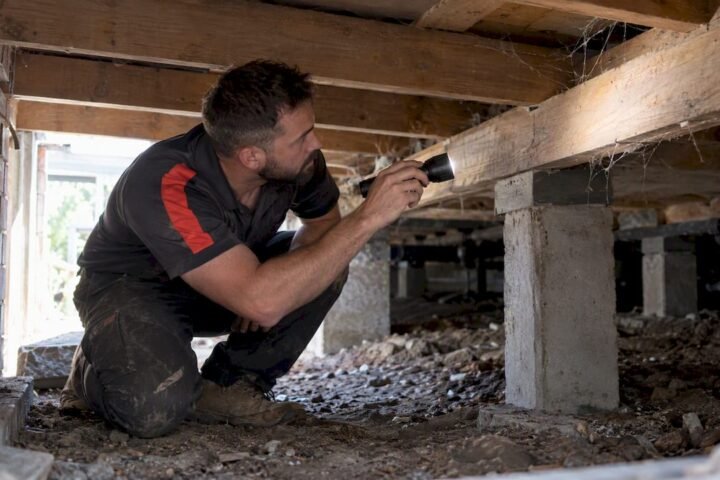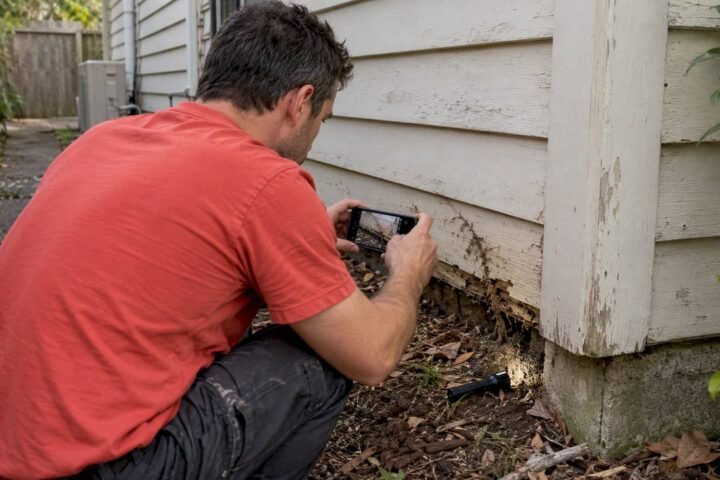
The most common cockroach hiding places are behind and under kitchen appliances, inside cabinets and pantries, under sinks and around plumbing, in wall and ceiling voids, and in cluttered storage or laundry areas. These spots offer warmth, moisture, food residue and darkness, everything a roach needs to shelter and breed. Spotting even one roach in daylight usually means a much larger population is hiding nearby and worth inspecting further.
TL;DR:
- Cockroaches hide in kitchen appliances, cabinets, plumbing areas, and wall voids where warmth, moisture, and food residue attract them.
- Inspect behind and under refrigerators, ovens, sinks, and appliances, especially in dark, undisturbed spots such as cabinet corners and storage boxes.
- Structural gaps around pipes, electrical chases, and entry points in walls and ceilings facilitate movement and re-infestation if not sealed properly.
- Outdoor sources like subfloors, timber piles, and garden debris contribute significantly to indoor cockroach populations, requiring outdoor elimination efforts.
- Visible signs like droppings, egg cases, and musty odors indicate larger hidden populations; multiple treatments and ongoing sanitation are necessary for full eradication.
Table of Contents
- 1. Kitchen and food-preparation areas
- 2. Plumbing, sinks, drains and laundries
- 3. Walls, skirting boards and ceiling cavities
- 4. Furniture, electronics and cluttered storage
- 5. Outdoor-adjacent entry points and underfloor spaces
- 6. Signs of hidden infestations and a basic inspection checklist
- 7. Short-term control steps you can take now
- 8. When to call a licensed pest manager
- 9. How hiding places differ by cockroach species
- 10. How hiding behavior shifts with severity and season
- 11. What a realistic timeline for control looks like
- Professional cockroach control when DIY isn’t enough
- FAQ
- Sources
1. Kitchen and food-preparation areas
Kitchens draw cockroaches more than any other room because they combine food, water and warmth in one place. Behind and under refrigerators, the motor generates heat while spilled drinks and crumbs collect in the gap few people ever clean. Ovens work the same way: grease splatters build up underneath and along the back panel, creating a food source roaches can access without ever being seen.
Cabinets and pantry shelves offer dark, undisturbed cover, and dark wooden undersides are a favorite spot for egg cases to stick and incubate. Check the corners of shelving and the hinge areas of cabinet doors, where droppings often collect first.
- Behind and under refrigerators and ovens, where warmth and grease accumulate.
- Inside pantry shelves and cabinet corners, especially dark wooden undersides.
- Around garbage bins, grease traps and waste disposal units.
These areas concentrate food and moisture in a small footprint, which is exactly why they top every inspection checklist.
2. Plumbing, sinks, drains and laundries
Moisture draws cockroaches as reliably as food does, which makes plumbing fixtures a top hiding zone. Under sinks, check around p-traps and pipe joints for droppings and ootheca stuck to the underside of cabinets. According to Northern Territory health guidance, sealing gaps around plumbing penetrations reduces both entry points and harbourage.
Floor drains and uncovered external drains act as both shelter and highway, letting roaches travel between units or come in from outside. Laundries deserve the same scrutiny: behind and under washing machines, around hot water systems and behind dryers, the warmth and occasional damp air create ideal conditions.
- Under sinks and around p-trap and pipe joints.
- Floor drains and external drain covers near the home.
- Behind washing machines, dryers and hot water systems.
Pro Tip: Run a flashlight along the base of pipe fittings at night, when roaches are most active and least likely to retreat before you see them.
3. Walls, skirting boards and ceiling cavities
Structural gaps give cockroaches protected travel routes between rooms and even between adjoining properties. Northern Territory guidance notes that cockroaches can move between dwellings through shared walls and plumbing chases, which explains recurring activity even in clean homes.
- Check gaps behind skirting boards and around electrical or service chases cut into walls.
- Inspect ceiling voids and subfloor spaces, which let roaches bypass rooms entirely while moving through a building.
- Seal small gaps around pipes, cables and skirting joints where it is safe to access them yourself.
Sealing these entry points does more to prevent re-infestation than almost any surface-level cleaning, because it removes the travel corridors roaches rely on.
4. Furniture, electronics and cluttered storage
Everyday clutter gives cockroaches cover that is easy to overlook. Sofas, bookcases and rarely used small appliances create dark, undisturbed pockets, particularly in rooms that see little daily traffic. Cardboard boxes, stacked newspapers and paper storage are especially attractive: the material itself provides both shelter and a surface where egg cases can be laid undisturbed.
- Inspect inside and under sofas, behind bookcases and underneath appliances that sit idle for weeks.
- Treat cardboard boxes, newspaper stacks and paper clutter as high-risk hiding and breeding sites.
- Clear unnecessary clutter and store food-grade goods in sealed plastic containers rather than cardboard.
A Karratha council factsheet specifically advises against bringing unnecessary corrugated cardboard into the home, since it offers both cover and an ideal surface for egg cases.
5. Outdoor-adjacent entry points and underfloor spaces
Indoor infestations often start outside. Subfloors and crawl spaces, garden debris and stacks of timber stored near the foundation give roaches a staging ground before they move indoors. Gaps at doors, vents, pipe penetrations and damaged weatherstripping offer the entry route.
- Check subfloor vents, crawl spaces and timber or mulch piles stacked against exterior walls.
- Inspect door sweeps, vent screens and pipe penetrations for gaps wide enough to admit a roach.
- Watch for recurring activity linked to neighboring properties or shared drain lines, which can reintroduce roaches after treatment.
Addressing these outdoor sources matters as much as indoor cleaning, since sealing the house without removing outdoor harborage only slows the problem down.
6. Signs of hidden infestations and a basic inspection checklist
Cockroaches are nocturnal and hide well, so the signs they leave behind often matter more than direct sightings. Key indicators include small speckled droppings, egg cases (ootheca), grease smears along edges, and a persistent musty odor, all detailed in a Karratha council pest management factsheet, which also notes that daytime sightings often signal a severe infestation.
- Place sticky monitoring traps in kitchens, bathrooms and laundries for a week to gauge activity.
- Inspect at night with a flashlight, since sudden light tends to send roaches scattering from hiding spots.
- Work through a priority order: kitchen first, then under sinks, behind appliances, storage areas and wall voids.
A single female German cockroach can produce 5 to 8 egg cases in her lifetime, each holding up to 40 eggs, according to enHealth guidance. One visible adult can represent a far larger hidden population.
7. Short-term control steps you can take now
Sanitation remains the first and most effective move. Clear crumbs promptly, keep food sealed, manage bin lids and remove cardboard that provides both food residue and shelter. Clean under and behind appliances where grease and debris build up unnoticed.
Moisture control matters just as much: fix leaking taps, vent laundries and bathrooms properly, and remove any standing water, since damp conditions sustain populations even after cleaning. Gel baits and monitoring traps, placed along known travel routes, work better than blanket sprays, which tend to scatter roaches into new hiding spots rather than eliminate them.
- Remove food residue, seal pantry items and empty bins regularly.
- Fix leaks and improve ventilation in laundries and bathrooms.
- Place gel baits near harborage points rather than relying on sprays alone.
Pro Tip: Avoid spraying directly on bait stations. Surface insecticide can repel roaches from the bait entirely, cutting its effectiveness.
8. When to call a licensed pest manager
DIY sanitation and baiting handle light activity, but certain signs call for professional help. Daytime sightings across multiple rooms, large numbers of droppings, clusters of ootheca, or activity that returns after your own treatment attempts all point to an established population hiding in structural voids that store-bought products rarely reach.
A licensed inspection typically includes species identification, a survey of structural voids, checks on moisture sources and entry points, and placement of monitoring traps. Treatment usually combines targeted baits or gels with sealing of harborage sites and scheduled follow-up visits, an approach consistent with the sanitation and repeat-treatment principles in enHealth guidance. Licensed technicians also track service history using scheduling tools similar to pest control management software to keep follow-ups on schedule.
- Ask about safety around children and pets before any treatment begins.
- Confirm whether follow-up visits are included if activity persists.
- Request a written summary of the structural issues the inspection uncovers.
Our guide on cockroach prevention covers these red flags in more depth if you are still deciding whether to book an inspection.
9. How hiding places differ by cockroach species
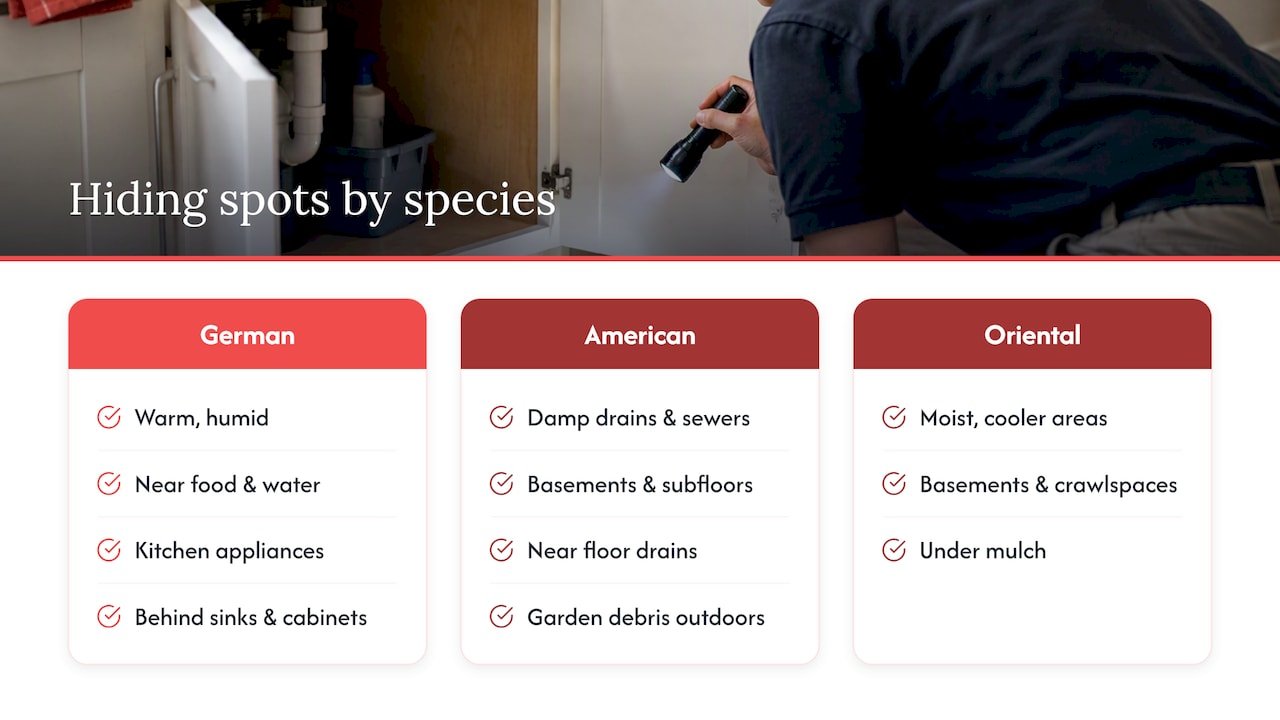
Not every cockroach species hides the same way, and knowing which one you are dealing with changes where to look. German cockroaches, the most common indoor species, prefer warm, humid spots close to food and water, which is why they cluster around kitchen appliances, behind sinks and inside cabinet hinges. Their egg cases are often carried by the female until just before hatching, so they tend to appear wherever the adult has been resting.
American cockroaches, larger and more associated with drains and sewers, favor damp basements, subfloor spaces and areas near floor drains or external drain covers. They range more widely than German cockroaches and are more likely to be found outdoors in garden debris or under stacked timber before moving inside.
Oriental cockroaches also gravitate toward moisture but tolerate cooler conditions, often turning up in basements, crawl spaces or under mulch rather than near warm appliances. Because their preferences differ, a treatment plan built around one species can miss another entirely, which is part of why a licensed inspection starts with identifying the species present rather than assuming all roaches behave alike.
10. How hiding behavior shifts with severity and season
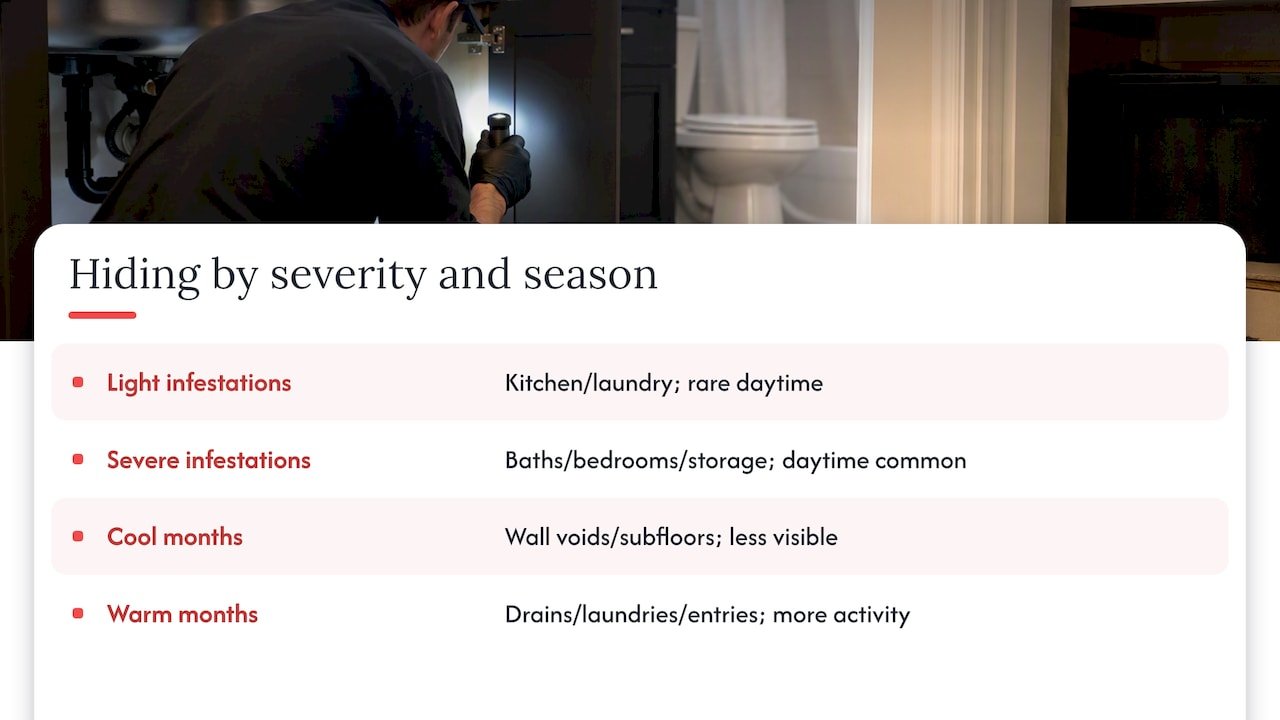
Light infestations tend to stay concentrated in one or two rooms, usually the kitchen or a laundry, with roaches rarely seen during the day. As a population grows, hiding spots multiply outward into bathrooms, bedrooms and storage areas, and sightings during daylight hours become more frequent, a pattern the Karratha factsheet links directly to severe infestations.
Seasonal shifts also change where roaches shelter. In cooler months, they push deeper into wall voids, subfloors and heated appliance housings to stay warm, which can make them less visible even though the population has not shrunk. Warmer, humid conditions bring increased movement and breeding, so activity in drains, laundries and outdoor-adjacent entry points tends to pick up. Recognizing these shifts helps explain why a home can look “roach-free” for weeks and then see a sudden spike: the population was hiding deeper, not gone.
11. What a realistic timeline for control looks like
Eradicating an established cockroach population rarely happens in one treatment. It usually takes multiple visits combined with sustained sanitation, sealing and moisture control, an approach generally known as integrated pest management. Relying on sprays or baits alone, without addressing clutter, leaks and entry points, tends to produce short-term knockdown followed by a return of activity within weeks.
When an infestation spans multiple units in an apartment building or keeps recurring despite your own efforts, coordinated professional treatment across the affected properties is usually the only way to break the cycle.
Professional cockroach control when DIY isn’t enough
When hiding spots turn into a recurring problem, our general pest control service combines licensed inspection with targeted treatment rather than guesswork. We use thermal imaging and modern detection methods to locate harborage in voids that are hard to reach on your own, with treatments chosen for safety around children and pets.

- General pest control covering kitchens, plumbing areas, wall voids and subfloor spaces.
- Cockroach inspection and treatment from technicians with experience.
- Fast response times backed by extensive experience.
Book a general pest control inspection and get a technician out to find what’s hiding before it spreads further.
FAQ
Where can cockroaches hide in a home?
Cockroaches hide behind and under kitchen appliances, inside cabinets and pantries, under sinks, in wall and ceiling voids, and in cluttered storage like cardboard boxes. They favor warm, dark, moist spots close to a food source, which is why kitchens and laundries see the most activity.
How many roaches do I have if I see one?
Seeing one roach, especially during the day, often means a much larger population is hiding nearby. A single female German cockroach can produce 5 to 8 egg cases in her lifetime, each holding up to 40 eggs, so visible adults rarely reflect the true size of an infestation.
Do roaches have a queen?
No, cockroaches do not have a queen or a hierarchical colony structure like ants or bees. Each female reproduces independently, laying egg cases that hatch into nymphs, which is part of why populations can grow quickly once established.
What gets rid of roaches immediately?
No single product eliminates an established infestation immediately. Sanitation, moisture control and targeted gel baits placed near harborage sites reduce activity fastest, but enHealth guidance notes that established populations typically need monitoring and repeat treatment to fully resolve.
When should I call a professional instead of treating it myself?
Daytime sightings across multiple rooms, large numbers of droppings or ootheca, or activity that returns after your own treatment are strong signs you need a licensed inspection. Our guide on preparing for a pest control visit explains what to expect before a technician arrives.
Sources
- enHealth guidance – Arthropod pests of public health significance in Australia
- Karratha shire cockroach management factsheet
- Northern Territory government guidance: cockroach harbourage and prevention