Most ants in your lawn are not a problem, and the right first move is inspection, not insecticide. Check how many mounds you have, how big they are, and whether the grass around them is actually dying or thinning. A handful of small mounds in an otherwise healthy lawn usually means you can let them be. But if mounds keep multiplying, the turf is dying back, mowing has become risky, or you’re seeing aggressive stinging ants, that’s your signal to act.
- Mild activity: improve mowing height and watering, then wait and watch.
- Moderate activity: try targeted baiting at the mound entrance.
- Severe or invasive species: call a licensed technician, since persistent infestations or fire ant sightings often need professional-grade ant treatment rather than a home remedy.
Key Takeaways
Ants in the lawn usually signal thin, dry turf rather than a true infestation, and cultural fixes solve more cases than pesticide ever will.
| Point | Details |
|---|---|
| Tolerate small colonies | A few isolated mounds with no turf damage are usually more helpful than harmful. |
| Fix the turf first | Raise mowing height to 3 to 4 inches and water consistently to make soil less attractive to nesting ants. |
| Use bait over spray | Granular or gel baits reach the queen; surface sprays only kill visible foragers. |
| Watch for aggressive species | Fast-moving, stinging ants need species identification before any treatment. |
| Call in professionals when needed | Bugspatrol offers licensed inspection and targeted treatment for persistent or high-risk ant colonies. |
Table of Contents
- Why Ants Show Up in Lawn Grass in the First Place
- What Do Ant Mounds and Colonies Actually Look Like?
- Should You Treat the Ants or Leave Them Alone?
- How to Discourage Ants Without Chemicals
- How to Kill Ants Without Killing Your Grass
- When Should You Call a Licensed Pest Technician?
- Get Professional Ant Control From Bugspatrol
- A Practical Note on Living With Lawn Ants
- Sources
Why Ants Show Up in Lawn Grass in the First Place
Ants aren’t invaders. They’re opportunists responding to conditions your lawn is already offering them. Before you declare war on every mound, it helps to know what they’re actually doing down there and why your yard looked appealing to them in the first place.
- Ants aerate compacted soil, break down organic debris, and eat the eggs and larvae of other lawn pests, which can quietly benefit turf health.
- They gravitate toward dry, sparse grass and sandy or loose soil, because loose ground is easier to excavate and dry turf offers less root competition.
- Common triggers include underwatering, mowing too short, and thin patches where grass cover has worn away.
- Real problems start when mound density climbs high enough to catch a mower blade, create a tripping hazard, or leave bare soil scars across the yard.
In other words, ant colonies in lawn areas are often a symptom of thin or stressed turf, not a random invasion. Fix the turf, and you often fix the ant problem at the same time.
What Do Ant Mounds and Colonies Actually Look Like?
Identifying a colony correctly saves you from either overreacting to a harmless mound or ignoring a real problem until it spreads. Field ants, the most common lawn species, build small dirt volcanoes with a central opening, usually one to two inches tall, made of loose, fine soil pushed up from underground tunnels.
Work through this quick check before deciding on treatment:
- Count the mounds. A few scattered across a large lawn is routine; dozens clustered in one section is not.
- Look for turf damage. Yellowing grass, bare soil, or heaved patches around a mound suggest the colony is expanding aggressively.
- Watch ant behavior for a minute. Calm, slow-moving foragers are typical of harmless species; ants that swarm and bite when disturbed need a closer look.
- If you see reddish ants converging fast and stinging, treat that as a possible fire ant colony and get an identification before doing anything else.
Pro Tip: Snap a photo of the mound and a few ants next to a coin for scale before you treat anything. It makes species identification far easier if you need a second opinion.
Should You Treat the Ants or Leave Them Alone?
This is the decision that trips up most homeowners, and the answer usually comes down to counting damage, not counting ants.
Tolerate ants when:
- Mounds are small, isolated, and few in number.
- The lawn itself shows no dieback, bare patches, or soil heaving.
- The colony seems to be doing its job quietly, feeding on grubs and pest larvae without disturbing the surface.
Take action when:
- Mounds are large, numerous, or visibly spreading week over week.
- Turf damage keeps recurring in the same spots.
- Mowing has become a safety issue because of raised or hidden mounds.
- You suspect fire ants or another aggressive, invasive species.
If you genuinely can’t tell which category you’re in, don’t guess. Sampling a mound or booking a professional ant removal inspection gets you a species ID and an honest read on risk, which is worth more than another round of trial-and-error products.
How to Discourage Ants Without Chemicals
Cultural fixes work because they attack the root cause: dry, thin turf that ants find easy to colonize. These changes take a season to show full results, but they reduce recolonization far better than a one-time spray ever will.
- Raise your mower deck to 3 to 4 inches and stop scalping the lawn. Turfgrass specialists at Michigan State University’s Integrated Pest Management program point to taller, denser turf as a direct deterrent to visible mound-building.
- Adjust your irrigation schedule so soil stays consistently moist through dry spells instead of baking hard, since ants prefer dry ground for tunneling.
- Overseed or topdress bare and sandy patches to close off the loose soil ants favor for nest entrances.
- Clean up fallen fruit, spilled birdseed, and pet waste promptly. These are food sources that pull foraging ants toward high-traffic areas of the yard.
Pro Tip: A partnership with a good fertilization and turf maintenance program does more long-term ant prevention than any spray bottle. Dense, well-fed grass simply gives ants less reason to move in.
How to Kill Ants Without Killing Your Grass
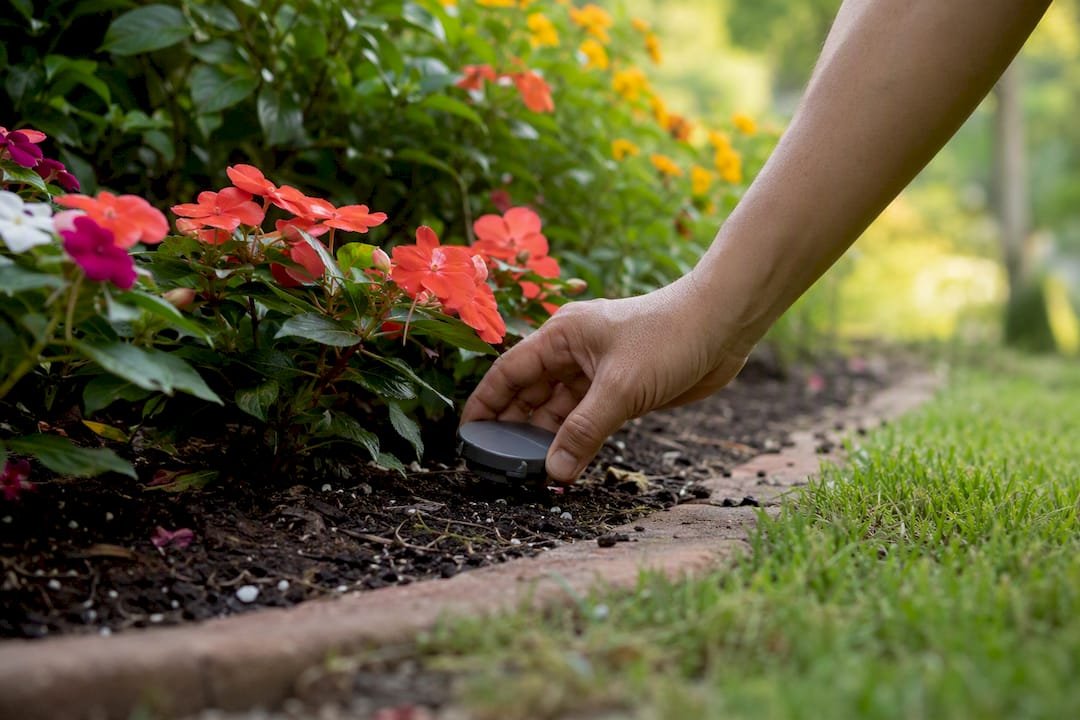
When cultural fixes aren’t enough and a colony is doing real damage, the tool that works is bait, not surface spray. Granular or gel baits get carried back into the nest by foraging workers, which means the bait eventually reaches the queen. That’s the difference between knocking back a colony and actually ending one.
- Place bait near active mound entrances during peak foraging times, usually warmer parts of the day when you can see ants moving in and out.
- Follow the product label exactly. Watering in a treatment only when the label says to prevents both wasted product and unnecessary turf burn.
- Surface sprays kill the ants they touch but rarely reach the nest itself, which is why they tend to disappoint homeowners looking for lasting results.
- Spot-treating an opened mound with a labeled insecticide can knock down a large colony fast, but University of Illinois Extension notes that recolonization is common, and repeated treatments often lose effectiveness over time.
There’s no reliable home remedy here either. Boiling water, vinegar, and cornmeal are popular online, but extension research consistently shows these methods rarely reach the queen and can scorch the very turf you’re trying to protect. Heavy-handed pesticide use for a minor mound can also wipe out the beneficial insects keeping other lawn pests in check, which sometimes trades one problem for a worse one.
When Should You Call a Licensed Pest Technician?
DIY methods have a ceiling. Once you’re dealing with a suspected invasive species, a safety hazard from mound density, or a colony that keeps coming back after cultural fixes and bait, it’s time to bring in a professional rather than escalate the chemicals yourself.
- A licensed technician identifies the exact species first, which changes everything about the treatment plan, especially if fire ants are in the picture.
- Professional treatment targets the nest directly, often with fire ant control methods built for aggressive species, and typically includes a follow-up visit to confirm the colony is actually gone.
- You also get straightforward safety guidance for kids and pets using the yard during and after treatment.
Bugspatrol technicians bring more than ten years of pest control experience to these calls, and every method is chosen with family and pet safety as a starting requirement, not an afterthought.
Get Professional Ant Control From Bugspatrol
If you’ve tried raising your mower deck, adjusting irrigation, and baiting the mounds and the ants are still winning, it’s time for a different approach. Bugspatrol handles the part DIY methods struggle with most: locating the nest, identifying the species correctly, and applying treatment that reaches the colony instead of just the ants you can see on the surface.

Bugspatrol’s technicians have over ten years of experience and have serviced numerous homes, with every treatment built around family and pet safety. A professional pest control visit starts with an inspection, includes targeted ant treatment tailored to the species found on your property, and can be paired with a maintenance plan to catch new activity before it becomes a full colony again. If mounds keep coming back or you suspect fire ants, book an inspection through Bugspatrol’s professional pest control services and get a straight answer on what your lawn actually needs.
A Practical Note on Living With Lawn Ants
Most of the ant panic I see is really turf panic in disguise. People notice a mound, assume the worst, and reach for a spray before checking whether the grass around it is even struggling. A “tolerate then target” approach respects what ants are actually doing for your soil while still drawing a firm line when a colony crosses into real damage or safety risk. When you’re not sure which side of that line you’re on, a licensed inspection settles it faster than another internet remedy will.
— navin
Sources
For readers who want to go deeper into the research behind these recommendations, a few extension sources cover the science in more detail:
- Is there an effective, natural way to get rid of ants in my lawn? — University of Maine Cooperative Extension
- Turfgrass ant (Formicidae) — Michigan State University Integrated Pest Management
- Ants Turfgrass (Formicidae) — University of Illinois Extension
Always check the product label before applying any treatment, and contact your local extension service if you’re unsure of the species you’re dealing with.
Recommended
- Bugs Patrol Canberra – Professional Pest Control Services
- Bugs Patrol Canberra – Professional Pest Control Services
- Bugs Patrol Canberra – Professional Pest Control Services
- Bugs Patrol Canberra – Professional Pest Control Services