A spider egg sac is a silk pouch holding anywhere from a handful to hundreds of eggs. Most sacs are harmless to find and easy to leave alone, but a few species guard theirs aggressively. Don’t pop or squeeze one. Photograph it from a distance, keep kids and pets away, and either remove it using safe methods below or call a licensed pest controller if you’re unsure what’s guarding it.
TL;DR:
- Most egg sacs are harmless and can be safely removed with a vacuum or long tool, but aggressive guarding females or venomous species require professional help.
- Identifiable egg sacs typically have woven silk shells, specific shapes, and attachment points, and may be guarded by a nearby adult spider.
- Sacs are usually found in protected outdoor spots or inside structures, most common from late spring through summer, and often in multiples due to predation risks.
- Recognizing a sac from debris or spiderlings depends on silk texture, attachment, shape, and spider behavior, with photos and scale references aiding identification.
- Prevention involves reducing outdoor lighting, sealing entry points, clearing webs, and moving stored items away from walls; persistent sacs may indicate an established population.
Table of Contents
- What Are Spider Egg Sacs and Why Do Spiders Make Them?
- What Do Spider Eggs Look Like? Shapes, Sizes, and Species Clues
- Where Do Spiders Usually Lay Their Eggs?
- How Can You Tell an Egg Sac From Debris or Spiderlings?
- When Is a Spider Egg Sac Dangerous?
- How Do You Safely Remove and Dispose of a Spider Egg Sac?
- How Do You Prevent Spider Egg Sacs Around Your Home?
- What Technicians See That Homeowners Miss
- Getting Help With Spider Egg Sacs and Ongoing Control
- Sources
- FAQ
What Are Spider Egg Sacs and Why Do Spiders Make Them?
An egg sac is a female spider’s way of shielding her eggs from drying out, getting crushed, or becoming a snack for beetles, ants, and birds. Egg counts vary by species and can be as few as a small handful or number in the several hundreds in a single sac, according to the Australian Museum.
Maternal strategy varies just as much as sac size. Some females carry their sac everywhere they go, some guard it from a fixed spot near a web or burrow, and others spin it, camouflage it, and walk away for good.
- Carriers: wolf spiders tote a spherical sac attached to their spinnerets
- Guarders: huntsman females stay near a flat sac for weeks
- Abandoners: many orb weavers seal a sac and leave it to weather the season
Wasps and flies frequently parasitize sacs, laying their own eggs inside and cutting the spiderling hatch rate. That predation pressure is a big reason many species produce multiple sacs across a season rather than betting everything on one.
What Do Spider Eggs Look Like? Shapes, Sizes, and Species Clues
Shape tells you more than color ever will. Four basic sac designs cover most of what you’ll find around a home: spherical, spindle shaped, flat or pillow shaped, and parcel shaped, each tied loosely to particular spider groups according to the Australian Museum.
- Redback (Latrodectus hasselti): smooth, spherical, cream to tan, usually tucked into a tangled web near ground level
- Huntsman (Isopeda and Isopedella species): flat, oval, pillow-like, wedged under bark or rocks, with the female stationed nearby
- Magnificent spider: several spindle-shaped sacs strung along a branch near her retreat
- Wolf spiders: spherical, carried directly on the female’s body rather than left in a fixed spot
- St Andrew’s Cross and related orb weavers (Argiope species): parcel shaped, often flattened and camouflaged with plant debris
Statistic to remember: a single Magnificent Spider sac can hold roughly 600 eggs, and she may spin several of them, according to Australian Museum research on the species. That’s why one sighting rarely means one sac. It usually means a cluster.
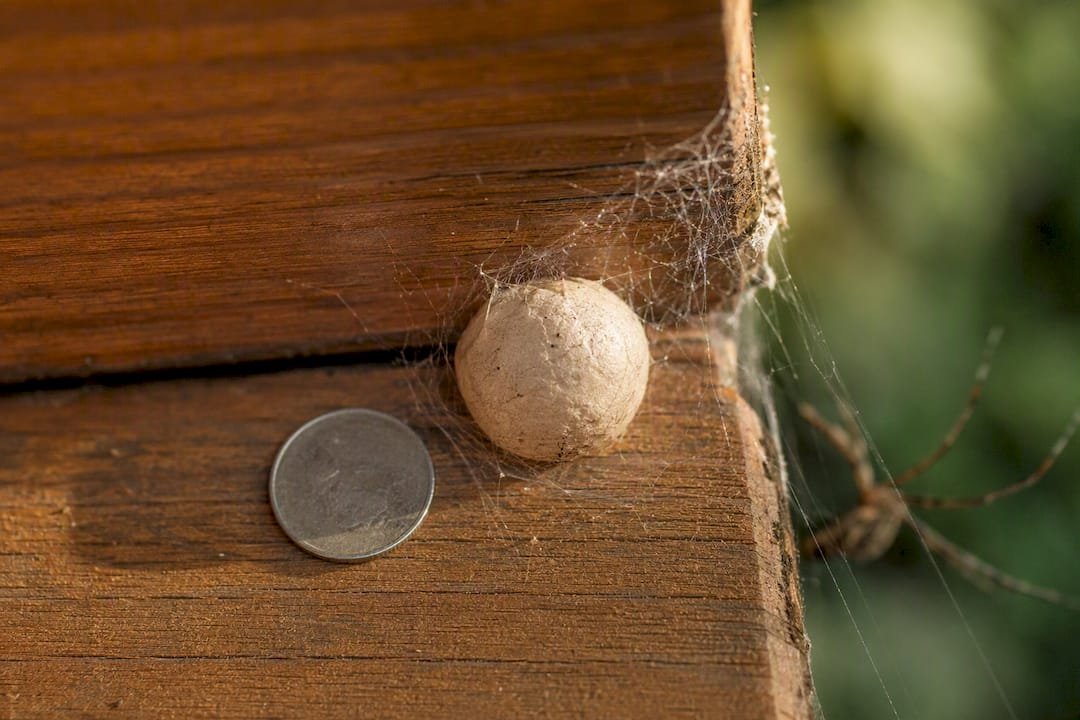
When you photograph a sac for identification, capture more than a close-up. Include a coin or ruler for scale, the exact attachment point, and any adult spider or retreat nearby, a method SpiderMentor’s photo documentation recommends for reliable species-level ID.
Where Do Spiders Usually Lay Their Eggs?
Egg sacs turn up wherever a female spider feels her eggs are protected from weather and predators. That means inside active webs, tucked behind eaves, wedged under stored boxes in garages, or hidden under loose bark and leaf litter.
- Inside or attached to an active web, often near the center
- Under eaves, in window frames, or behind shutters
- Behind boxes, tools, or firewood stacks in garages and sheds
- Under bark, rocks, or curled dead leaves outdoors
- Inside burrows for ground dwelling species like wolf spiders
Timing follows the warmer months in most regions, with adult females spinning sacs from late spring through summer and hatching typically following within weeks to a couple of months depending on species and temperature. A female guarding a sac usually sits within inches of it and adopts a defensive stance if disturbed, a behavioral cue worth noting before you get closer.
How Can You Tell an Egg Sac From Debris or Spiderlings?
Not everything silky and round is an egg sac. Dirt clumps, moth cocoons, and bark fragments get mistaken for sacs constantly, and a tight cluster of baby spiders can look like a sac from a distance. Work through this checklist before you touch anything:
- Check the silk texture. True egg sacs have a distinct woven or papery silk shell, not loose fibers or plant matter.
- Look at the attachment point. Sacs are anchored with silk threads to a web, surface, or the mother’s spinnerets, not just resting loosely.
- Note the shape. Spherical, spindle, flat, or parcel shaped are the real options. Irregular blobs are usually debris.
- Watch for nearby adult behavior. A spider standing guard or reacting defensively confirms it’s a live sac, not an empty or discarded one.
- Compare size against a scale reference. Most sacs run from pea sized to roughly a golf ball, depending on species.
Spiderlings clustered on a mother’s back or in a loose ball after hatching move independently and scatter when disturbed. A sac does not move on its own.
Pro Tip: If you’re not confident distinguishing a sac from a cocoon or clustered spiderlings, a clear photo with a coin for scale is often enough for a pest technician to identify it remotely, no physical sample needed.
When Is a Spider Egg Sac Dangerous?
Most sacs sitting quietly in a garden shed pose zero threat. The risk shows up when a medically significant species is actively guarding hers, or when the sac sits somewhere people brush past daily, like a doorway or laundry area.
- A large, aggressive female stationed directly on or beside the sac
- The sac is located inside living spaces, not just the yard or garage
- The species matches a known venomous type for your region, such as redbacks
- Multiple sacs suggest an established breeding population rather than a single stray
Female huntsman spiders, for instance, guard their sacs for several weeks and can become defensive if the sac is disturbed during that period, per the Australian Museum. That’s exactly the kind of behavioral context that should push a homeowner toward calling a professional rather than reaching in with bare hands. Worth noting too: a parasitized sac may look intact but contain no viable spiderlings at all, so appearance alone doesn’t tell you what’s inside.
How Do You Safely Remove and Dispose of a Spider Egg Sac?
Before touching anything, clear the area. Keep children and pets out of the room or yard section, and if you suspect a venomous species is nearby, wear gloves and long sleeves.
- Isolate the area and confirm no adult spider is aggressively guarding the sac before proceeding.
- Vacuum with a hose attachment for sacs in open, reachable spots, or use a long-handled tool to sweep the sac directly into a sealed container without crushing it.
- Double-bag the sac in plastic, seal it tightly, and place it in an outdoor bin immediately. Never pop it indoors.
- Dispose of the sealed bag outside the same day, ideally in an outdoor bin rather than an indoor trash can.
- Monitor the area for a week or two afterward in case spiderlings had already begun to emerge before removal.
Pro Tip: Freezing a sealed egg sac for 48 hours before disposal is a low-effort way to make sure nothing hatches in your outdoor bin.
Stop and call a professional the moment you’re unsure of the species, if the guarding female is unusually large or aggressive, or if the sac is in a spot you can’t reach without direct contact.
How Do You Prevent Spider Egg Sacs Around Your Home?
Chasing down individual sacs is a losing game if the underlying attractors stay in place. Reducing outdoor lighting, sealing gaps, and clearing clutter tends to matter more long term than obsessing over every single sac you spot.
- Switch exterior lights to yellow or motion activated bulbs, since bright white light draws in the insects spiders hunt
- Seal cracks around windows, doors, and foundation vents
- Install or repair fly screens on windows and vents
- Clear webs regularly, especially in eaves, corners, and garages
- Move stored boxes and firewood off the floor and away from exterior walls
- Trim shrubs and vegetation back from the house
If sacs keep reappearing despite these steps, that’s usually a sign of an established population rather than a one off, and worth a proper inspection rather than another round of DIY cleanup.
What Technicians See That Homeowners Miss
Most callouts we hear about start with someone finding one sac and assuming it’s isolated. In practice, spiders that produce multiple sacs across a season are hedging against parasitism, so one sighting often means more nearby that haven’t been spotted yet. Licensed technicians check retreats, eaves, and voids homeowners rarely think to look, and they know which species justify caution versus which sacs are safe to clear without a second thought. When in doubt, get eyes on it before deciding.
— navin
Getting Help With Spider Egg Sacs and Ongoing Control
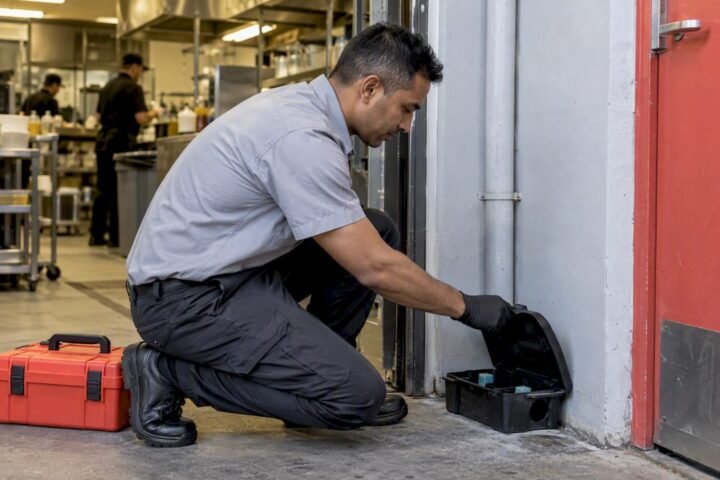
Finding a sac is one thing. Knowing whether it’s safe to remove yourself, or whether it belongs to a species that warrants real caution, is where most homeowners get stuck. Pest management companies offer homeowners faster, safer answers than guessing from a photo online: licensed technicians who inspect the property, identify the species, and clear sacs and adult spiders using safe and effective methods.

A typical booking starts with an inspection of the areas spiders actually favor, eaves, garages, retreats under bark or stored items, followed by targeted removal and a plan to stop the pattern from repeating. If you’re dealing with a guarded sac you don’t want to approach, or you’ve found several sacs and suspect an established population, Bugspatrol’s spider pest control service covers inspection through to long-term prevention. For a broader look at what triggers repeat sightings, the spider control guide walks through what treatment plans usually involve. Book an inspection through Bugspatrol’s general pest control page and get a technician looking at the actual problem instead of a photo.
Sources
FAQ
Should I remove spider egg sacs myself?
You can remove most sacs yourself using a vacuum hose or long-handled tool, sealing the sac before disposal. If a large or aggressive female is guarding it, or you can’t identify the species, call a licensed pest controller instead.
How can you tell if something is a spider egg sac?
Check for a woven silk shell attached to a web, surface, or the spider itself, in a spherical, spindle, flat, or parcel shape. Debris and cocoons usually lack that distinct silk texture and clear attachment point.
What should you do if you find spider egg sacs?
Photograph the sac from a distance with something for scale, avoid touching or popping it, and keep children and pets away until you’ve identified the species or decided on a removal method.
Which spiders leave egg sacs?
Redbacks, huntsman spiders, wolf spiders, Magnificent spiders, and orb weavers like St Andrew’s Cross all produce egg sacs, each with a distinct shape and placement. Huntsman females guard flat, oval sacs for about three weeks, while wolf spiders carry spherical sacs directly on their bodies.