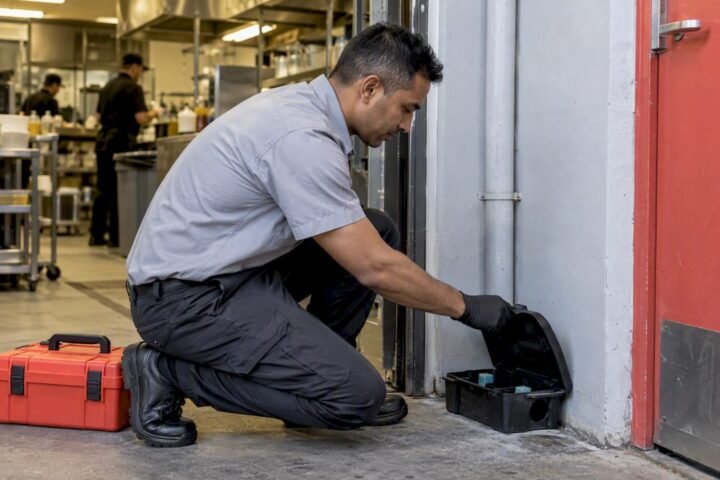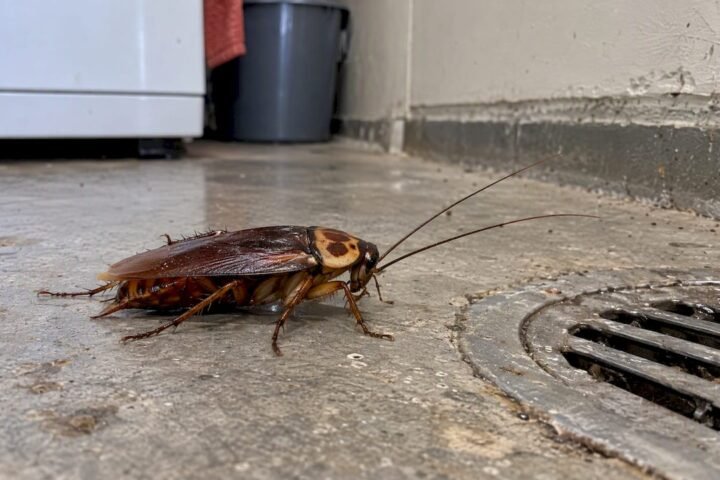
If you’re hearing scurrying overhead after dark or finding rice-grain droppings near the attic hatch, you almost certainly have a rat in your roof. The priority order is simple: inspect from the hatch without walking in, protect food and exposed wiring, then move to removal and sealing.
Do these three things in the next 24 hours:
- Store pet food and any open pantry items in sealed containers, since loose food keeps rats coming back nightly.
- Note the times and locations of noise, which helps confirm activity patterns before you call anyone out.
- Skip sealing entry points for now. Closing gaps while rats are still active traps them inside, and a rat that dies in a wall void turns into a smell problem that lasts for weeks.
From here, choose between a DIY response and a licensed inspection, depending on what you find.
Key Takeaways
Roof rat control works when removal comes first and exclusion follows immediately, using durable materials rather than a quick DIY patch.
| Point | Details |
|---|---|
| Confirm before acting | Check droppings, rub marks, and insulation from the attic hatch to rule out mice or other pests. |
| Traps beat loose bait | Snap traps on runways confirm removal; loose rodenticide risks dead animals in inaccessible voids. |
| Sequence matters | Never seal entry points until you’ve confirmed the roof is clear of active rats. |
| Exclusion is permanent | Steel mesh, metal flashing, and durable sealant outlast foam or caulk against gnawing. |
| Bugspatrol handles the full cycle | Inspection, trapping, exclusion, and follow-up visits are handled as one job, not separate fixes. |
Where to Read More
- Rodents – pest control covers government guidance on safe rodent control methods.
- UA Cooperative Extension explains roof rat behavior and access points in depth.
- Better Health Channel details safe cleanup and contamination procedures.
- AtticShield’s sign guide breaks down what attic evidence actually means.
- New England Metal Roof outlines exclusion materials and correct sequencing.
Table of Contents
- Signs You Have a Rat in the Roof, Not Something Else
- What to Do (and Avoid) Right Now
- DIY Options: What Actually Works
- Sealing the Roof for Good
- When to Call a Licensed Pest Technician
- Handling the Health Risks Safely
- How Bugspatrol Handles Rat-In-Roof Jobs
- Frequently Asked Questions
- Sources
Signs You Have a Rat in the Roof, Not Something Else
Roof rats leave a fairly predictable trail once they’ve settled in. The clearest indicator is nighttime activity: scurrying or gnawing sounds that start soon after dark and continue until just before dawn, since roof rats are nocturnal and stick to a routine.
Look for these signs from the attic hatch:
- Dark, spindle-shaped droppings typically found clustered near nesting spots.
- Greasy rub marks along beams and eaves, left behind by fur brushing the same paths night after night.
- Tunneled or flattened insulation, which shows where rats have built runways through the material.
- Fresh gnaw marks on wood framing or wiring insulation when present.
These attic warning signs hold up as reliable indicators across most roof rat cases, and the pattern is distinct enough to rule out other pests once you know what to check for.
Outside the roof, watch for rats running along power lines or fence tops at dusk, branches or vines touching the eaves, and droppings collecting along gutters. Roof rats are strong climbers that use trees, fences, and utility lines to reach the roofline, which is exactly why exclusion work near the roof edge matters so much later on.
One quick way to rule out mice: mouse droppings are smaller and pointed, mouse activity tends to happen closer to ground level, and mice make a lighter scratching sound rather than the heavier thump of a rat moving across ceiling joists.
What to Do (and Avoid) Right Now
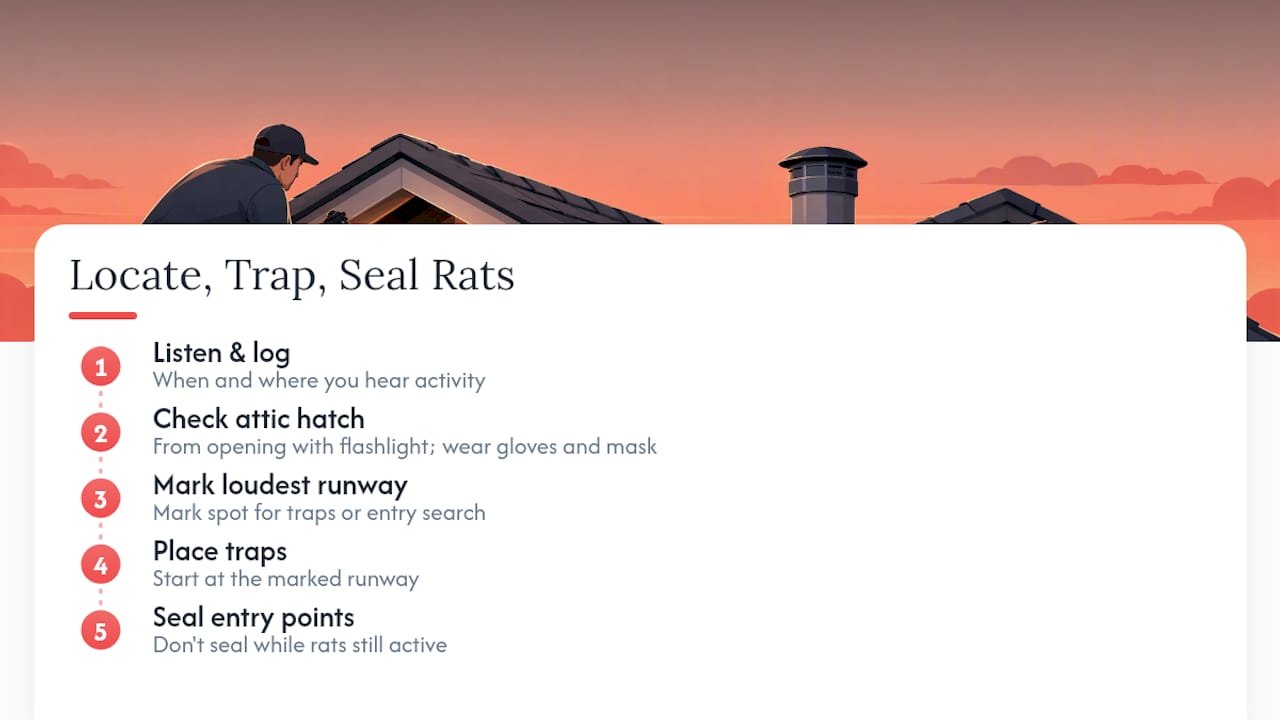
Do secure food sources first. That means pet bowls, birdseed, and anything stored loosely in a garage or shed. Do log when and where you hear activity. Do check the attic hatch from the opening with a flashlight rather than walking across the joists, since rat urine and droppings create a genuine biohazard risk underfoot.
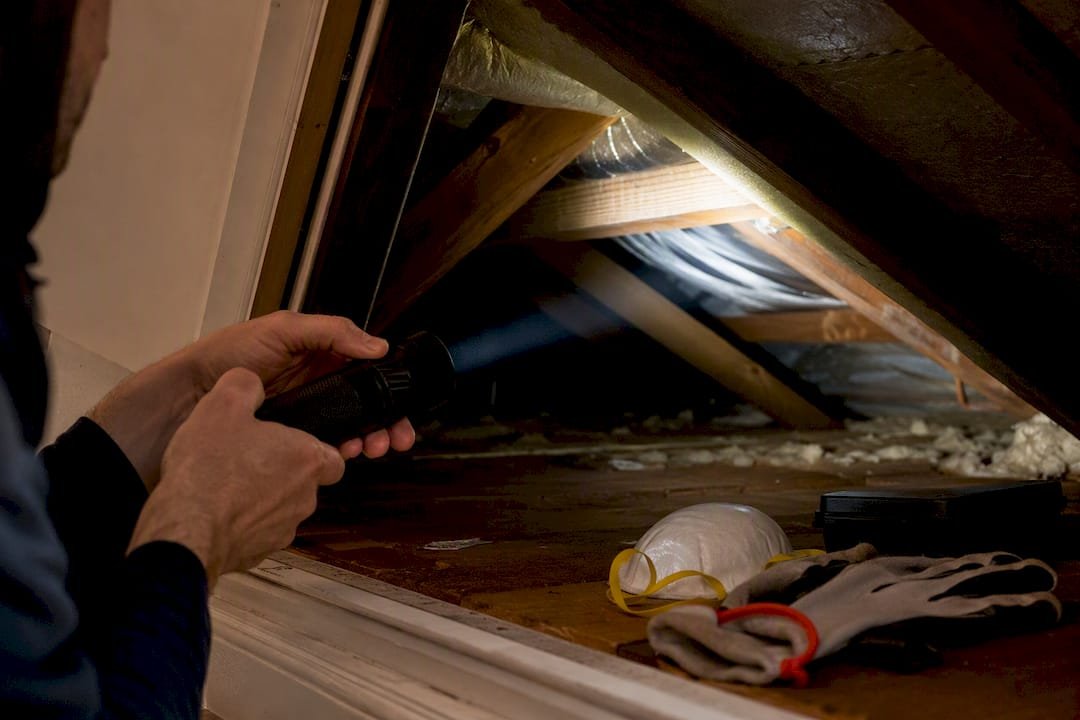
Don’t seal entry points while rats are still active inside. Don’t scatter loose rodenticide bait into the ceiling void. Don’t handle droppings or nesting material without gloves and a mask.
If you suspect gnawing near an electrical box or junction, that’s a fire risk worth taking seriously. Switching off the affected circuit until an electrician checks the wiring is the safer move than waiting.
Pro Tip: Rats reuse the same runways every night. If you can hear where the noise is loudest, mark that spot. It tells a technician exactly where to place traps or start the entry-point search.
DIY Options: What Actually Works
Snap traps placed directly on known runways are the safest and most effective DIY method, mainly because they let you confirm removal. A trap gives you a body. Bait stations hidden in a ceiling void give you a smell six weeks later and no idea where it’s coming from.
- Identify the runway using the rub marks and droppings you found during inspection.
- Place traps perpendicular to the runway, close to the wall or beam where the rat naturally travels.
- Check traps daily for the first week, resetting and repositioning if nothing’s triggered after three or four nights.
- Avoid loose rodenticide in the ceiling. Poisoned rats often die inside wall voids or insulation where you can’t reach them, which is why pest technicians generally prefer snap traps placed on confirmed runways over scattering bait and hoping for the best.
Ultrasonic repellent devices and scented deterrents can make a roof slightly less appealing, but they rarely resolve an established colony on their own. Treat them as a minor add-on, not a solution.
Pro Tip: If you’re still hearing activity after two weeks of consistent trapping, that’s a sign the colony is larger than a DIY approach can handle, not a sign to try more traps.
Sealing the Roof for Good
Exclusion is what actually stops rats from coming back, and it only works once removal is confirmed. Steel hardware cloth, metal flashing, and durable exterior sealant are the materials that hold up against gnawing, unlike foam or standard caulk, which rats chew through easily.
Work through this checklist once the roof is clear:
- Trim tree branches and vines back from the roofline, since rats climb from trees, fences, and utility lines rather than from ground level.
- Cover vents and pipe penetrations with steel mesh.
- Fix loose soffits, damaged tiles, and gaps around cable entry points.
- Clear gutters and remove debris piles that create shelter near the roof edge.
Replace insulation that’s been heavily soiled with droppings or urine, and schedule a follow-up attic check within a month of the initial work. Populations rebound fast if even one gap goes unsealed. That’s the entire reason durable exclusion work happens after removal, not before it.
Pro Tip: University extension researchers note that removing a fruit or nut tree rarely solves an existing infestation on its own, since roof rats exploit a wide range of food sources. Exclusion and habitat management matter more than any single landscape fix.
When to Call a Licensed Pest Technician
Call a professional if you find gnawed wiring, droppings spread across multiple areas, activity that continues after two to three weeks of consistent trapping, or a smell suggesting a carcass in an inaccessible void. Uncertainty about where rats are actually entering is also a good reason to bring in a technician rather than keep guessing.
A solid inspection should include species confirmation, a full map of exterior entry points, a targeted trapping strategy, and permanent exclusion using materials that outlast a DIY caulk job.
A proper quote should spell out the scope of work, the materials used for sealing, whether follow-up visits are included, and a realistic timeline. Most cases resolve within a few weeks once inspection, removal, and proofing happen in the right order.
Ask specifically about follow-up monitoring visits, since a single treatment without a return check leaves you guessing about whether the work held.
Handling the Health Risks Safely
Rodent droppings and urine carry real contamination risk, so treat the cleanup like a biohazard job: wear gloves and a mask, ventilate the space, and never dry-sweep droppings, since that stirs contaminated dust into the air you’re breathing.
Skip loose bait in ceiling voids for the same reason mentioned earlier: a carcass you can’t reach becomes a lingering odor and secondary pest problem. Confirmed trap removal avoids that entirely.
If gnawing near electrical wiring is suspected, switching off the circuit and calling an electrician isn’t optional caution. It’s the difference between a pest problem and a fire risk.
For step-by-step sanitation procedures, government health guidance covers the cleanup basics in more depth than most pest blogs bother to.
A Technician’s Note on the Most Common Mistake
Most homeowners treat the rats and stop there. The fix that actually holds is professional exclusion done right after removal is confirmed, not before.
How Bugspatrol Handles Rat-In-Roof Jobs
Bugspatrol runs inspection, targeted removal, and permanent proofing as one connected job, so you’re not paying for a treatment that stops working the moment a new litter finds the same gap.

A typical callout includes:
- A full roof and roofline inspection to confirm species and map every entry point.
- Trapping placed on confirmed runways, not blind baiting in the ceiling void.
- Exclusion work using steel mesh and durable sealant on vents, pipe penetrations, and soffit gaps.
- Cleanup advice for contaminated insulation and a follow-up visit to confirm the job held.
Every step is handled with family and pet safety in mind, since a fix that works but leaves bait or chemicals within reach of kids isn’t really a fix. If you’re dealing with active scurrying, droppings, or a suspected rat in the roof, book an inspection and get a technician mapping entry points before the colony grows.
Frequently Asked Questions
How do I know if it’s rats in the ceiling and not possums or birds?
Rats move faster and lighter than possums, and their droppings are smaller and spindle-shaped rather than round. Bird activity is usually daytime only, while roof rats are almost always active at night.
Can rats in the roof cause structural damage?
Yes. Constant gnawing on wood framing and wiring insulation can weaken structural elements and create fire hazards over time, especially if wiring damage goes unnoticed for months.
Is it safe to seal roof gaps myself once the rats are gone?
Yes, once you’ve confirmed no activity for at least a week or two. Use steel mesh or metal flashing rather than foam, since rats chew through softer materials easily.
How long does professional rat in roof removal typically take?
Most cases resolve within a few weeks when inspection, trapping, and exclusion happen in the right order, followed by a monitoring visit to confirm the fix held.
Sources
- Rodents – pest control
- How to Identify and Discourage Roof Rats | UA Cooperative Extension
- Rats in the Attic? 10 Signs, What They Mean, What To Do
- Removing Rats From Roof: Safe Exclusion and Deterrence – New England Metal Roof
- Better Health Channel
Recommended
- Bugs Patrol Canberra – Professional Pest Control Services
- Bugs Patrol Canberra – Professional Pest Control Services
- Rodent Pest Removal – Bugs Patrol Pest Management
- Rodent Control Removal – Bugs Patrol Pest Management