You can usually walk back into a treated room within a few hours for most standard interior sprays, once the surfaces feel dry to the touch. The one thing to avoid in that window matters more than anything else on this page: don’t mop, scrub, or wipe down skirting boards and baseboards, because that’s exactly where the residual barrier sits and wet cleaning strips it off before it has done its job.
Ventilate the treated rooms by opening windows if the weather allows it, and keep kids and pets away from skirtings, corners, and any spots the technician pointed out. Light dusting and vacuuming away from those edges are typically fine sooner than mopping.
- Wait for the “all clear” from your technician’s written instructions before deep cleaning.
- Keep pets and children off treated floors until surfaces are visibly dry.
- Skip mopping or wiping baseboards and skirtings for now, even if they look dry.
- Open a window or two to clear odor and speed up drying.
Pro Tip: Take a photo of your technician’s paperwork right after the job. It usually lists the product used and a suggested re-entry time, and you’ll want that reference in two weeks if you’re wondering whether it’s safe to deep clean yet.
Key Takeaways
Preserving a pest treatment’s effectiveness depends on waiting for surfaces to dry before light cleaning and holding off on mopping skirtings for days to weeks.
| Point | Details |
|---|---|
| Re-entry timing | Most interior sprays allow re-entry in 2 to 4 hours, once surfaces feel dry. |
| Skirtings need patience | Avoid mopping or scrubbing baseboards for days to weeks, since that’s where residual barriers sit. |
| Vacuum, don’t mop, early | Vacuuming away from edges is usually safe sooner and helps expose pests to treated surfaces. |
| More bugs isn’t failure | A short-term rise in sightings is normal and typically settles within one to two weeks. |
| Document before you call | Photos, a monitoring log, and the treatment date speed up any follow-up with your technician. |
Table of Contents
- How Long After Pest Control Can I Clean, By Treatment Type?
- A Phased Cleaning Schedule You Can Actually Follow
- Is It Safe for Kids, Pets, and Food Right After Treatment?
- Vacuuming, Mopping, and Laundry: The Techniques That Matter
- Why You Might See More Bugs Right After Treatment
- When Should You Call Your Pest Control Company Back?
- A Note From Bugspatrol on Aftercare
- Why Homeowners Get This Backwards
- Sources
How Long After Pest Control Can I Clean, By Treatment Type?
The honest answer is: it depends what kind of treatment you got, and there isn’t one universal number. Here’s the practical breakdown pest professionals actually use.
Perimeter and crack-and-crevice sprays. These usually dry to the touch in a few hours, but “dry” and “cured” are not the same thing. The EPA’s overview of pesticide active ingredients explains that many residual products need to bond with the surface to keep working, and that bonding process can take longer than the drying itself. That’s why light cleaning away from edges is fine within hours, but wiping down skirtings and baseboards should wait days, sometimes longer.
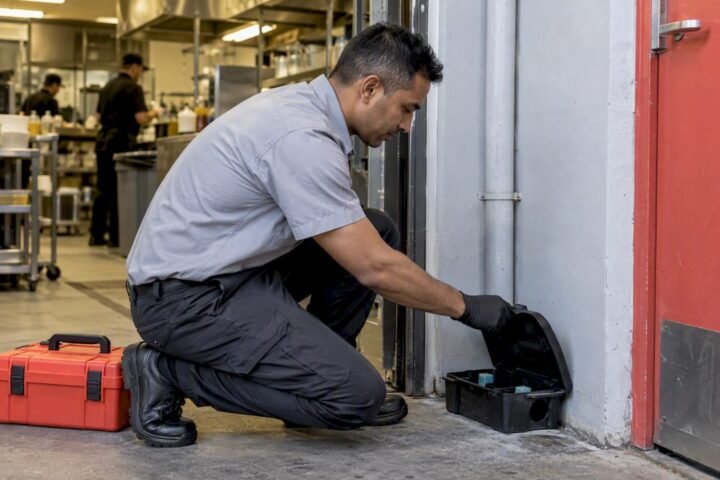
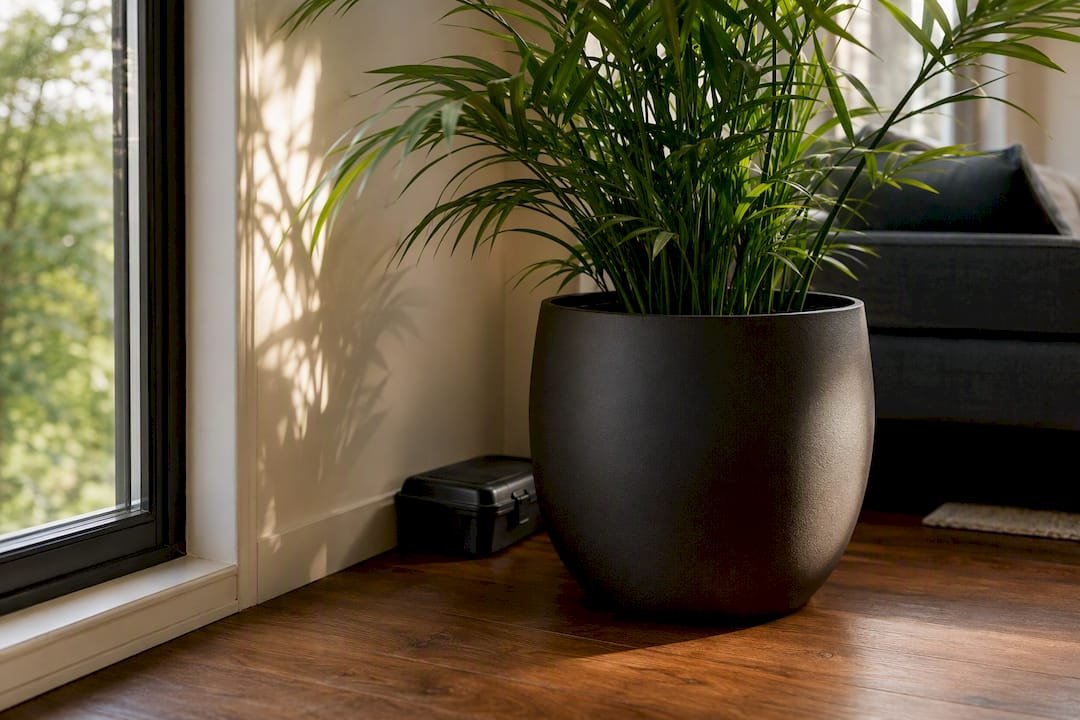
Baits. Bait stations are designed to be left alone entirely. Don’t clean, spray, or move them, since disturbing a bait station is often worse than not cleaning near it at all.
Fogging or space treatments. These typically call for a longer re-entry period than a simple spray, often several hours to a full day, and linens or soft furnishings exposed during the process usually need laundering afterward, a point Hoffer Pest’s guide on post treatment cleaning also flags as a common source of confusion for homeowners.
Granular or dust treatments. These are built to stay in place for weeks, so vacuuming or sweeping directly over treated areas defeats the purpose.
Humidity, room temperature, and airflow all shift these windows, and your technician’s specific instructions always override any general guideline here.
A Phased Cleaning Schedule You Can Actually Follow
Think of aftercare in three stages instead of one big “when can I clean” question. Each stage has a different job.
- Hours 0 to 48: let it set. Ventilate the space, keep foot traffic light, and once surfaces are dry, you can wipe kitchen counters and other food-prep areas that weren’t directly treated. Vacuuming carpets away from skirtings is usually fine at this stage, and it can actually help by disturbing eggs and pushing pests across treated surfaces, according to Beaver Maids’ guide to post-treatment cleaning.
- Days 3 to 14: clean the middle, leave the edges. Mop the centers of rooms as normal. Stay a short distance back from skirtings and baseboards rather than running the mop right up against them. Spot-clean spills as they happen, but skip bleach or strong solvents anywhere near treated zones, since they can break down the residual chemistry faster than plain water would.
- Weeks 2 through 8: resume full detail cleaning gradually. This is when you can go back to scrubbing skirtings, wiping window tracks, and doing the deep clean you’ve probably been putting off. Choose gentler cleaning products where you can, since harsh degreasers and ammonia-based cleaners tend to break down residual barriers faster than mild detergent and water.
Pro Tip: If you treated for fleas, daily vacuuming during the first one to two weeks is worth the effort. It’s commonly recommended because it stimulates pupae to hatch early, exposing newly emerged fleas to the treated surfaces before they can build up a new population.
Is It Safe for Kids, Pets, and Food Right After Treatment?
Most standard treatments call for keeping children and pets off treated surfaces until everything is visibly dry, generally that same 2 to 4 hour window as general re-entry. Give extra caution to sensitive animals: birds, reptiles, fish tanks, and very young or nursing pets often need to stay out of the treated area longer, since they’re more sensitive to airborne residue than a dog or cat.
- Wash pet bowls and refill fresh water once floors are dry, especially if bowls sat in a treated room.
- Launder pet bedding that was in the treated space, particularly after fogging or space treatments, since washing linens at a warm temperature helps clear any residue and any eggs or larvae picked up during treatment.
- Return food items and dishes from cupboards only after those cupboards have been wiped down, if they were part of the treated area.
- If skin or paws make contact with wet residue, rinse the area with soap and water right away.
Call a doctor for a person, or a vet for a pet, if you notice irritation, breathing changes, vomiting, or any unusual reaction after contact with treated surfaces, don’t wait it out. Bugspatrol’s guidance on protecting pets and children during pest control covers this in more depth for households with sensitive family members.
Vacuuming, Mopping, and Laundry: The Techniques That Matter
Getting the mechanics right protects the treatment while keeping your home actually livable in the meantime.
Vacuuming is your friend here, not just a chore. It physically disturbs eggs and larvae and pushes pests across treated surfaces they’d otherwise avoid, which is part of why daily vacuuming gets recommended so often after flea jobs.
- Vacuum floors and soft furnishings regularly, but avoid running the vacuum head directly along skirting boards for an extended period after treatment.
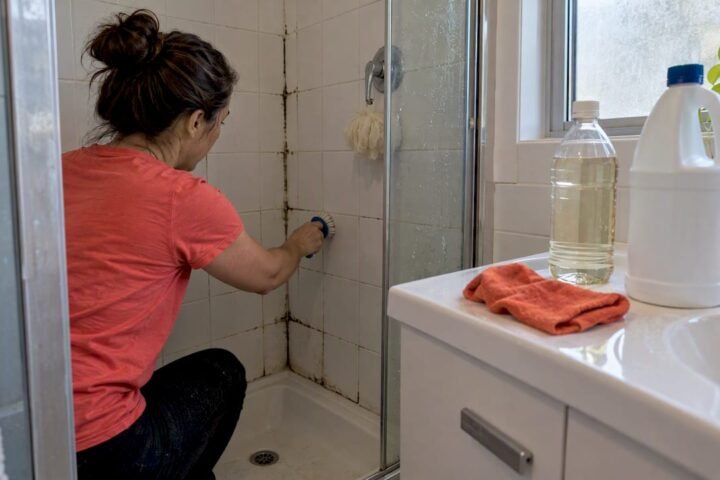
- Mop the open, center areas of a room as usual, but leave a gap of a few centimeters from skirtings and baseboards rather than running the mop head right up against them.
- Skip bleach, ammonia, and heavy-duty degreasers near treated zones. Plain water or a mild detergent is the safer choice while residuals are still active.
- After a fogging or fumigation treatment, wash bedding, curtains, and cushion covers at the warmest temperature the fabric allows.
Pro Tip: If you’re not sure whether a stain or mark on a wall is from the treatment or just everyday grime, leave it a few extra days rather than reaching for a strong cleaner. Residual barriers are far more valuable than a spotless baseboard.
Why You Might See More Bugs Right After Treatment
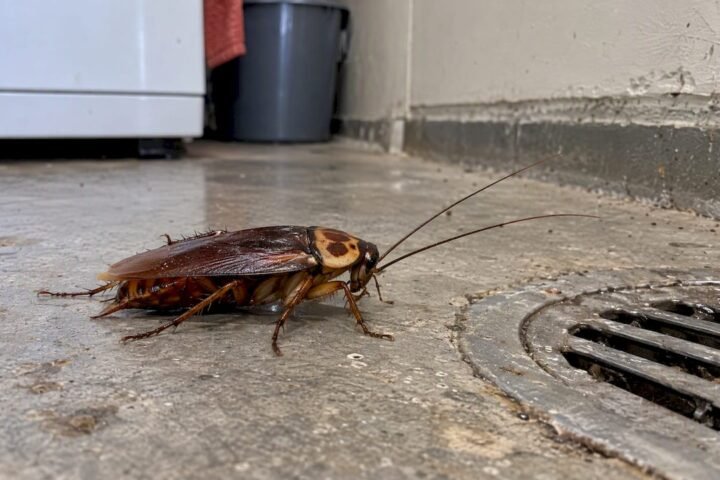
Seeing more pests in the days right after a treatment doesn’t mean it failed. Most sprays and baits work by driving pests out of wall voids and hidden nests before they die, so a short-term uptick in sightings is normal and usually settles down within one to two weeks as the population collapses.
A simple log helps you tell normal die-off from a real problem. Note the date, time, room, and rough number of pests you see, or snap a quick photo if you’re not sure what you’re looking at.
- Expect the highest activity in the first 3 to 5 days, then a steady drop-off.
- Sightings concentrated in one room after week two can point to a missed nest or entry point.
- Dead pests appearing in unusual numbers are a sign the treatment is working, not a red flag on their own.
- Live, active pests still crossing treated zones after the expected window is worth flagging to your technician.
When Should You Call Your Pest Control Company Back?
Most treatments come with a window where results should be obvious, and most companies stand behind that window with a guarantee or follow-up visit.
- No noticeable drop in activity after 2 to 3 weeks for a general spray treatment, or longer for baiting programs that work more gradually.
- Live pests still visible directly on or near treated cracks and skirtings well past the expected re-entry period.
- Any adverse reaction in a family member or pet, no matter how minor it seems, deserves a call the same day.
- Before you call, pull together photos, your monitoring log, and the treatment date. Faster troubleshooting starts with better information.
Check the paperwork from your original job first. Most professional providers, Bugspatrol included, outline a specific follow-up or guarantee policy, and knowing what’s covered saves a back-and-forth phone call.
A Note From Bugspatrol on Aftercare
Bugspatrol technicians are licensed and use modern detection methods, including thermal imaging for termite inspections, and that same attention to detail carries into the aftercare instructions left with every job. With over 10 years in the field, the pattern holds steady: the treatments that fail early are almost always the ones cleaned too soon.
- Every job includes written re-entry and cleaning guidance specific to the product used.
- Unsure about a cleaning step? Ask your technician directly rather than guessing from a general timeline.
- Ongoing activity or a tricky property layout may call for a follow-up inspection rather than a repeat treatment.
If you want tailored aftercare advice or a follow-up visit, Bugspatrol’s professional pest control services page is the fastest way to get a technician back out to your property.
Ready to book a treatment or a follow-up inspection? Bugspatrol’s general pest control service covers the full process from initial treatment through aftercare guidance, so you’re not left guessing what happens once the technician leaves.
Why Homeowners Get This Backwards
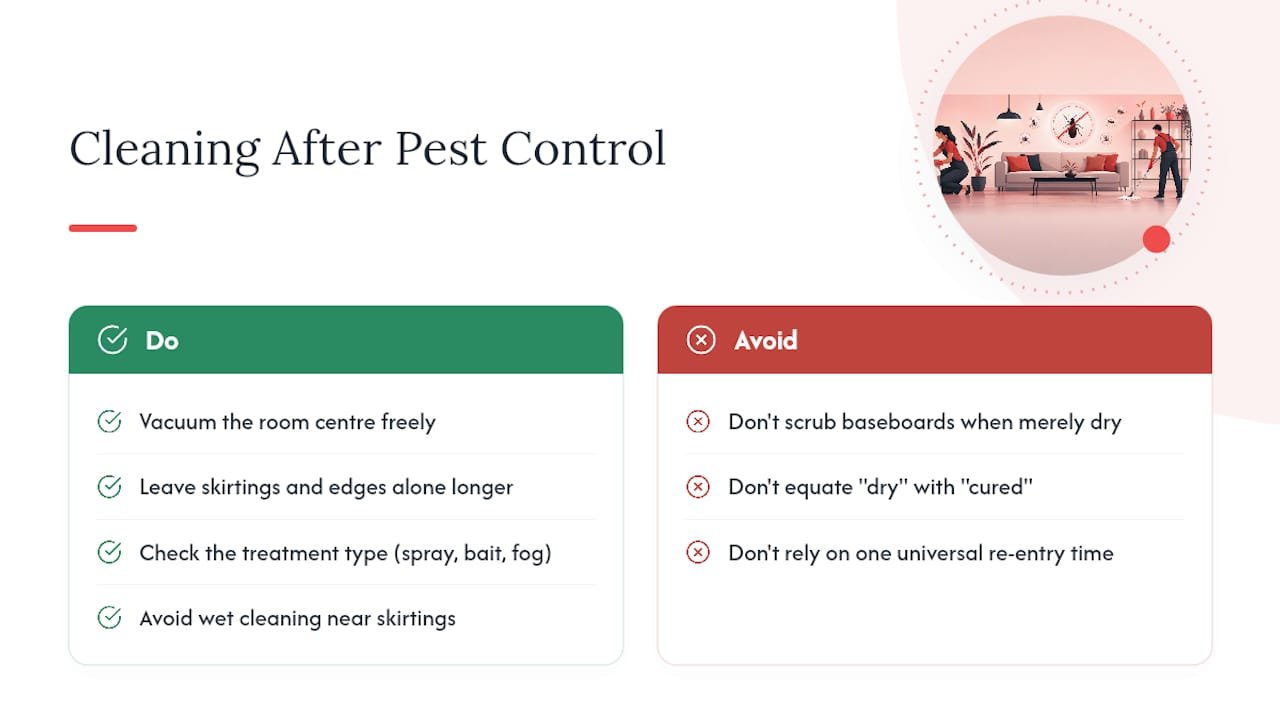
The conventional advice on this topic focuses almost entirely on “when can I clean,” as if the answer were one universal number. It isn’t, and treating it like one is the mistake I see repeated most. A perimeter spray, a bait station, and a fogging job behave completely differently, and the guidance that matters most, avoiding wet cleaning near skirtings, gets buried under generic re-entry times that don’t tell the whole story.
What’s underrated is patience with the edges of a room. Homeowners will happily leave a treated area alone for a few hours, then scrub the baseboards the moment it looks dry, not realizing “dry” and “cured” are different things entirely. That single habit undoes more treatments than any pest’s natural resistance does.
If you take one thing from this: vacuum the middle of the room as much as you want. Leave the edges alone longer than feels necessary. That’s where the actual protection lives.
Sources
For ingredient-level detail and broader post-treatment timelines, see the EPA’s pesticide ingredient overviews and Hoffer Pest’s cleaning timeline guide.
- EPA — Brief overviews about individual pesticides
- Can I mop after pest control? — Beaver Maids
- How Soon Can I Clean After Pest Control? Florida Guide — Hoffer Pest
Recommended
- Bugs Patrol Canberra – Professional Pest Control Services
- Bugs Patrol Canberra – Professional Pest Control Services
- Bugs Patrol Canberra – Professional Pest Control Services
- Pest Extermination Casey Solutions – Bugs Patrol Pest Management