If you see a steady stream of wasps disappearing into one hole in your brickwork or hear a dry, papery rustling behind the plaster, you’re likely dealing with a wasp nest in the wall, and that’s not a DIY job. Keep people and pets away, leave the entry point alone, and call a licensed pest controller. European wasps can pack tens of thousands of workers into a wall cavity by late summer, so treat this as urgent, not optional.
TL;DR:
- Wall nests often have consistent, straight flight paths exiting the same gap over 10 to 15 minutes, especially in warm afternoons.
- DIY methods like aerosols, water flooding, or sealing entry points usually fail because they do not reach the queen or deep cavity nests effectively.
- The most effective treatment involves residual dust applied by licensed technicians, who target the colony without unnecessary wall removal or demolition.
- Sealing structural entry points and conducting spring inspections can prevent future nests, as queens scout for new sites early in the season.
- Immediate risks include multiple stings during disturbance, with severe allergic reactions requiring urgent medical attention and close post-sting monitoring.
Table of Contents
- How Can You Tell a Wasp Nest Is Inside the Wall?
- Why Wall Nests Are Dangerous and Why DIY Often Backfires
- What Should You Do Right Now While You Wait for Help?
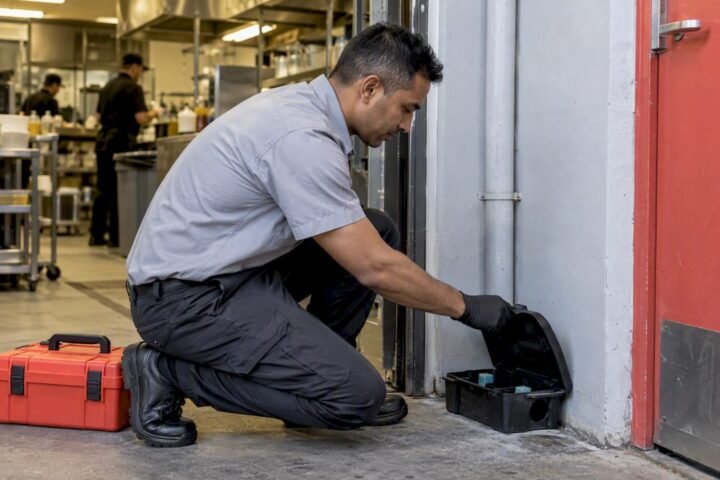
- What Do Licensed Technicians Actually Do for a Wall Nest?
- How Do You Stop Wasps From Coming Back?
- Could a Wasp Sting From a Wall Nest Cause a Serious Reaction?
- Are There Legal Rules Around Removing a Wasp Nest?
- How Much Does Professional Wasp Nest Removal Cost?
- How Do You Make Sure the Colony Doesn’t Come Back?
- Can a Wasp Nest Damage the Wall Itself?
- Publisher Perspective: What Our Technicians Commonly Find
- Fast, Direct Wasp Removal Without the Wall Guesswork
- Sources
How Can You Tell a Wasp Nest Is Inside the Wall?
The single most reliable clue is a flight path, not a sighting. A wasp or two circling the yard means nothing. Wasps flying in and out of the exact same gap, over and over, in a straight line, points to an active colony right behind that spot. Agriculture Victoria recommends watching that traffic pattern from a safe distance as the primary way to confirm a cavity nest before anyone touches anything.
Other signs worth noting:
- Direction and timing: watch the same gap for 10 to 15 minutes at different times of day; a nest shows consistent, repeated traffic, especially warm afternoons.
- Sound: a soft, continuous rustling or scratching inside the wall, often louder at dusk when the colony is most active.
- Visible entry points: gaps around weep holes, cracked mortar, weatherboard joints, or vents, sometimes with brown staining or fine debris nearby.
- Species matters: European wasps hide their nests inside cavities and get defensive fast, while paper wasps usually build small, exposed umbrella-shaped nests you can actually see, often under eaves rather than inside walls.
Confusing casual foragers at a barbecue with an actual nest is common. Persistence and a fixed destination are what separate the two.
Why Wall Nests Are Dangerous and Why DIY Often Backfires
A colony behind drywall or brick is not a small problem waiting to become a big one. It already is one, and disturbing it triggers a mass response rather than a single sting.
Statistic to know: roughly 80% of European wasp nests sit underground, but the 20% that build inside structures tend to be the ones homeowners discover the hard way, often after a nest has already grown from golf-ball size in spring to basketball-size, holding well over 100,000 wasps, by late summer.
That growth curve is exactly why DIY methods fail so often:
- Store-bought aerosols work on contact and have short range; they rarely penetrate deep into a wall cavity to reach the queen.
- Flooding the cavity with water or attempting to smoke or burn wasps out risks fire damage, water damage, or both, on top of not actually killing the colony.
- Sealing the entry hole without treating the nest first can push wasps to chew a new exit, sometimes straight into a bedroom or living space.
- Agitating a nest without proper protection is how multiple stings happen in seconds, not minutes.
Bunnings’ own DIY guidance is blunt about this: chemical spray might handle a small, visible, accessible nest, but wall and ground nests call for a trained professional.
What Should You Do Right Now While You Wait for Help?
You can reduce risk in the next ten minutes without going anywhere near the nest. Here’s the order that matters most:
- Clear the area. Move kids, pets, and anyone with a known wasp allergy well away from the affected wall, inside and outside.
- Shut interior doors and windows near the suspected nest location to stop wasps from wandering into living areas if they find a gap.
- Leave the entry hole exactly as it is. Do not tape it, plug it, or spray into it. Blocking the only way out gives the colony a reason to find another one, possibly indoors.
- Call a licensed pest controller and describe what you’ve seen: the flight path, the sound, roughly how long you’ve noticed activity.
- Call emergency services (000) immediately if anyone is stung multiple times or shows signs of a serious allergic reaction, such as difficulty breathing, swelling of the face or throat, or dizziness.
- Document from a distance. A few photos or a short video of the entry point and flight pattern, taken from several meters away, help a technician assess the job before they even arrive.
Pro Tip: Note the time of day the activity is heaviest. Wasps are most active on warm afternoons, so technicians often schedule treatment closer to dusk when the colony has settled, which improves the odds of a clean, one-visit result.
What Do Licensed Technicians Actually Do for a Wall Nest?
A callout for a suspected wasp nest removal usually starts with the same groundwork a homeowner can’t safely do alone: confirming what’s actually in the wall before touching it.
Technicians typically work through these steps:
- Species identification, since European wasps and paper wasps call for different handling and carry different risk levels.
- Tracing the flight path to pinpoint the exact cavity location, sometimes across more than one visit if the nest is deep or the entry point is ambiguous.
- Estimating colony size based on activity level and time of year, which shapes how much product and how many follow-up checks the job needs.
- Applying a targeted treatment, most commonly a residual dust injected directly into the cavity entrance. Worker wasps carry the powder back into the nest on their bodies, which is how it reaches the queen even when the technician can’t see the nest itself.
Dust treatments carried into the nest by the workers themselves are why professional methods succeed where an aerosol from the hardware store usually doesn’t. It’s not a stronger spray. It’s a completely different delivery method.
Technicians wear protective suits and often work at dusk when wasps are less active and more likely to be inside the nest together. Most residual dust treatments bring a colony to inactivity within 24 to 48 hours. Physical removal of the nest and any wall repair only happens afterward, once it’s confirmed dead, and only if the cavity is actually accessible without unnecessary demolition.
How Do You Stop Wasps From Coming Back?
Treating the nest solves today’s problem. Sealing the building solves next spring’s.
- Identify every gap a wasp could use: weep holes, cracked mortar, gaps around vents, and loose weatherboard joints are the usual entry points.
- Fit purpose-built weep-hole screens rather than improvised covers; ad-hoc plugs can trap moisture and cause damp problems worse than the wasps. Weepa’s guidance on proper screening is worth following here.
- Walk the exterior once a season, particularly in early spring, when queens are scouting for nest sites and a small gap is far easier to seal than an established colony.
- Reduce attractants by keeping bins sealed and compost managed, since food scraps and sugary residue draw foraging wasps toward your house in the first place.
Pro Tip: Spring inspections matter more than summer ones. Catching a scouting queen before she settles in beats treating a colony that’s already established.
Could a Wasp Sting From a Wall Nest Cause a Serious Reaction?
A wall-cavity colony changes the math on stings, mainly because disturbing one rarely produces just one sting. When a nest is agitated, dozens of wasps can respond at once, and each wasp can sting repeatedly since, unlike bees, they don’t lose their stinger.
A normal reaction includes sharp pain, redness, and swelling that peaks within a day or two and fades on its own. Watch for the signs that separate a normal reaction from something more serious:
- Swelling that spreads beyond the sting site, especially to the face, lips, or throat
- Difficulty breathing or swallowing
- Dizziness, a rapid pulse, or a sudden drop in blood pressure
- Hives or intense itching across large areas of the body, not just near the sting
- Nausea, vomiting, or a feeling of impending collapse
Anaphylaxis can develop within minutes of a sting and is a medical emergency. Call 000 immediately if you or anyone nearby shows these symptoms, and use an adrenaline auto injector if one is available and prescribed. Anyone stung multiple times during a wall-nest disturbance should be monitored closely for at least 30 minutes, even without an obvious reaction, since venom load matters and multiple stings deliver a higher dose than one.
Are There Legal Rules Around Removing a Wasp Nest?
There’s no license required for a homeowner to spray a small, visible nest on their own property, but that freedom narrows fast once a nest sits inside a shared wall, a rental property, or a structure that isn’t entirely yours to modify.
Renters generally need to notify their landlord or property manager rather than treat the wall themselves, since accessing a cavity can involve cutting into a wall that isn’t theirs to alter. Strata and body corporate properties often have their own rules about who arranges pest treatment in shared walls and who pays for it. Pest control businesses operating in the Australian Capital Territory and surrounding areas also need to comply with chemical handling and workplace safety standards that govern how insecticides are stored, transported, and applied, which is a big part of why unlicensed DIY dust or spray use carries real risk beyond the wasps themselves.
If nest removal requires cutting into a wall or affects a shared boundary in a townhouse or unit block, it’s worth checking your lease, strata bylaws, or body corporate rules before booking any work, and confirming who’s responsible for the repair afterward.
How Much Does Professional Wasp Nest Removal Cost?
Pricing for a wall-cavity nest depends on a few variables: how deep the nest sits, how many treatment visits it takes, whether the wall needs to be opened for physical removal, and how large the colony has grown by the time you call.

A straightforward, accessible nest treated early in the season, when the colony is still golf-ball to tennis-ball size, generally costs less than a large, established colony discovered in late summer that needs multiple visits and possible wall access. Jobs that require opening a wall and patching it afterward cost more than a dust-injection treatment through an existing gap, since that work involves both pest treatment and basic building repair.
Most companies price a wasp job after a phone description or a quick inspection, since colony size and accessibility genuinely change the labor and materials involved. Getting an accurate quote usually means describing the entry point, the flight pattern, and roughly how long you’ve noticed activity, then having a technician confirm the details on-site. Emergency or same-day callouts, particularly for nests near entrances or high-traffic areas, sometimes carry a premium over a scheduled visit.
How Do You Make Sure the Colony Doesn’t Come Back?
Treatment ends the immediate threat, but wasps are creatures of habit, and an untreated attractant nearby can invite a new colony to the same general area even after the old one is gone.
A short follow-up check within a week or two of treatment confirms the nest is fully inactive rather than just quiet. Wasps sometimes show reduced but not zero activity in the first day or so after a dust treatment takes hold, so a second look matters more than watching for a day and assuming it’s over.
Beyond that first check, build in a seasonal habit: walk the exterior of the house each spring, since that’s when new queens scout for nest sites, and a fresh gap is far easier to spot and seal than an established colony discovered in February. Keep an eye on any wall section that had activity before. Old pheromone traces and structural features that made a spot attractive once can make it attractive again. Ongoing pest-management visits, rather than a single one-off treatment, catch these early signs before they turn into a repeat callout.
Can a Wasp Nest Damage the Wall Itself?
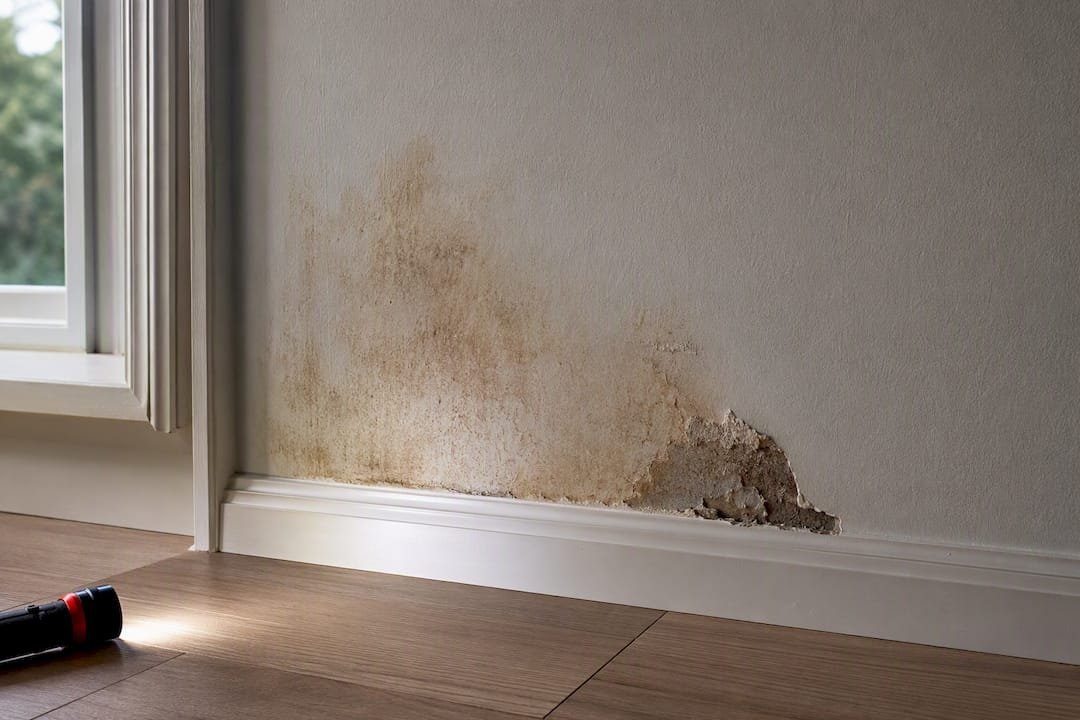
Wasps don’t chew through solid structural timber, but they do exploit existing weaknesses, and an established nest can make small problems worse. Papery nest material inside a cavity can hold moisture against timber framing, and an active colony occupying a wall void for months sometimes coincides with pre-existing rot, gaps, or damaged weatherproofing that let both the wasps and moisture in to begin with.
The bigger structural risk usually comes from removal, not the nest itself. Physical nest removal that requires cutting into a wall needs to be planned properly, since a rushed opening can damage wiring, insulation, or moisture barriers you didn’t know were there. That’s a case where pest control and building considerations overlap, and general guidance on hidden water damage inside walls explains why professionals check for underlying issues before deciding how much of a wall to open.
Once a nest has been treated and confirmed inactive, it’s worth a quick visual check of the surrounding wall section for staining, soft or crumbling material, or any smell of dampness. Those signs point to a separate moisture problem the wasp activity may have masked, not caused, and catching it early keeps a pest job from turning into a repair job down the line.
Publisher Perspective: What Our Technicians Commonly Find
Our technicians see the same pattern again and again: a homeowner notices activity for a week or two, assumes it will settle down, then calls once the sound behind the wall gets impossible to ignore. Most first visits start with tracing the flight path and confirming species before anything else happens.
We aim to treat with minimal disruption, using cavity access points that already exist wherever possible instead of opening walls unnecessarily, and we coordinate directly with homeowners if repair work becomes part of the job. A follow-up check after treatment is standard, not an upsell.
— navin
Fast, Direct Wasp Removal Without the Wall Guesswork
Licensed pest control technicians can offer a faster path than trying to identify, treat, and reseal a wall-cavity nest yourself: they trace the flight path, confirm the species, and apply the right treatment, instead of a trial-and-error cycle of hardware-store sprays that don’t reach the nest.

Booking a wasp control visit starts with a description of what you’ve seen: the entry point, the sound, the timing of activity. From there, a technician inspects the site, confirms the nest location and size, and gives you a treatment quote before any work starts, with most residual dust treatments settling the colony within 24 to 48 hours. If you’re already noticing a steady stream of wasps at one spot on your wall, get a pest control inspection booked before the colony grows any further into the season.
Sources
- Health
- European wasp | Priority pest insects and mites | Agriculture Victoria
- European wasp | Australian Museum
- Safe wasp nest removal | Termites VIC