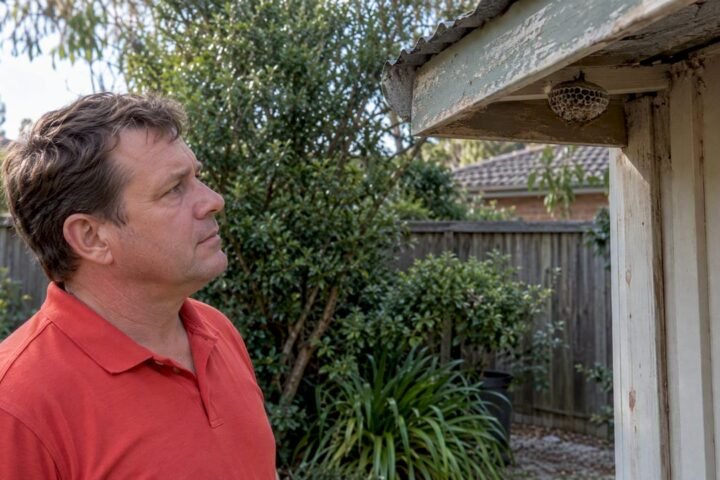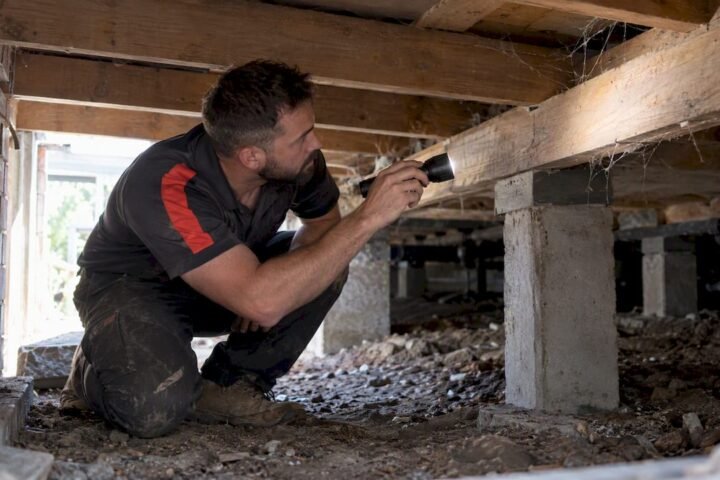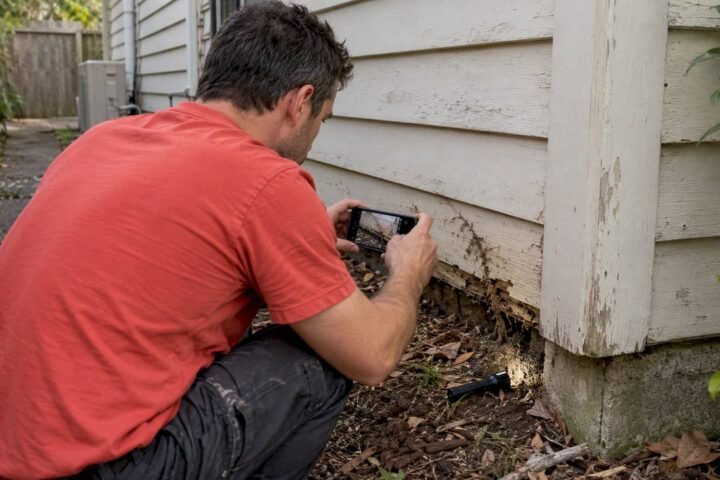
Small ants trailing to a bathroom drip almost always mean a moisture problem you can fix and bait your way out of. Pale, yellowish ants or large black ants over 6 millimeters point to pharaoh ants or carpenter ants; both call for professional attention rather than a spray can. Two things to do right now: wipe down the visible trail with soapy water to erase the scent path, then set a small bait station directly on that trail instead of spraying it.
- Wipe the trail, don’t spray it.
- Place bait on the path, not around the room.
- Check the ant’s size and color before deciding your next move.
Pro Tip: Snap a close-up photo of one ant on a white tile before you clean anything. Size and color are the fastest way to tell a five-minute fix from a job for a licensed technician.
Key Takeaways
Bathroom ant infestations are a moisture and residue problem first, and lasting control depends on identifying the species, baiting correctly, and fixing the leak that drew them in.
| Point | Details |
|---|---|
| Identify before you treat | Small dark ants usually mean fix a leak; pale or yellow ants signal pharaoh ants needing a pro; black ants over 6 mm suggest carpenter ants and structural moisture. |
| Bait, don’t spray | Gel and liquid baits let foragers carry poison back to the nest, while sprays can fragment colonies or trigger budding in pharaoh ants. |
| Fix moisture at the source | Leaky seals, condensation, and damp wall cavities are what draw ants in, not household mess. |
| Time your sealing | Wait 10 to 14 days after bait uptake begins before sealing entry points, so ants can still carry bait to the nest. |
| Call a pro for red flags | Bugspatrol’s licensed technicians handle moisture assessment, targeted baiting, and satellite nest location when DIY baiting stalls or carpenter ants suggest structural damage. |
Table of Contents
- How to stop ants in the bathroom in the next hour
- Why do ants keep showing up in the bathroom?
- Where are the ants coming from?
- What actually gets rid of bathroom ants?
- How do you keep ants from coming back?
- When should you stop DIYing and call a professional?
- How do you set bait traps that actually work?
- Does your cleaning routine make ants worse?
- What pros wish homeowners understood
- When it’s time to bring in BugsPatrol
- Frequently asked questions about bathroom ants
- Sources
How to stop ants in the bathroom in the next hour
You don’t need a full pest audit to slow things down today. Work through this in order.
- Trace the trail. Follow the line of ants backward to where it disappears, usually a baseboard gap, the vanity toe-kick, or a drain. Capture one ant in a sealed container or photograph it next to a coin for scale.
- Clean, then bait. Vacuum the trail and wipe it with soapy water or plain vinegar to break up the pheromone path ants leave for each other. Once it’s dry, set gel or liquid bait stations right where the trail was, not scattered around the room.
- Dry the room out. Run the exhaust fan, mop up standing water around the tub or sink, and check under the vanity and behind the baseboard for a leak you might have missed.
Skip the aerosol repellent spray during this first hour. Spraying a trail feels productive, but for some species it scatters the colony instead of killing it, and pharaoh ants in particular respond to sprays by “budding” into multiple new colonies elsewhere in the house.
Pro Tip: Bait works because foraging ants carry it back to feed the colony, including the queen — that’s why gel bait beats a direct spray every time you actually want the problem gone, not just hidden. Baits act slower than sprays but tend to be safer and more thorough, since the goal is colony elimination, not a body count on your tile.
Why do ants keep showing up in the bathroom?
Bathrooms aren’t magnets for ants because they’re dirty. They’re magnets because they’re wet. Water and humidity, not food, are usually what draws ants into a bathroom in the first place, and a bathroom is one of the few rooms in the house that manufactures its own condensation daily.
- Condensation on tiles, drips under the sink, and damp wall cavities behind tubs give thirsty colonies exactly what they need.
- Soap scum, toothpaste residue, hair, and skin oils sound trivial, but they’re enough to feed a foraging trail for weeks.
- Cracked grout, worn caulk, and gaps where pipes pass through the wall are tiny highways straight into the wall void.
- Some species are drawn to warm, humid microclimates specifically, which is part of why the species matters more than the mess.
A bone-dry-looking bathroom can still be hiding a slow leak behind the cabinet, and that gap between “looks fine” and “is actually dry” is where most repeat infestations live.
Where are the ants coming from?
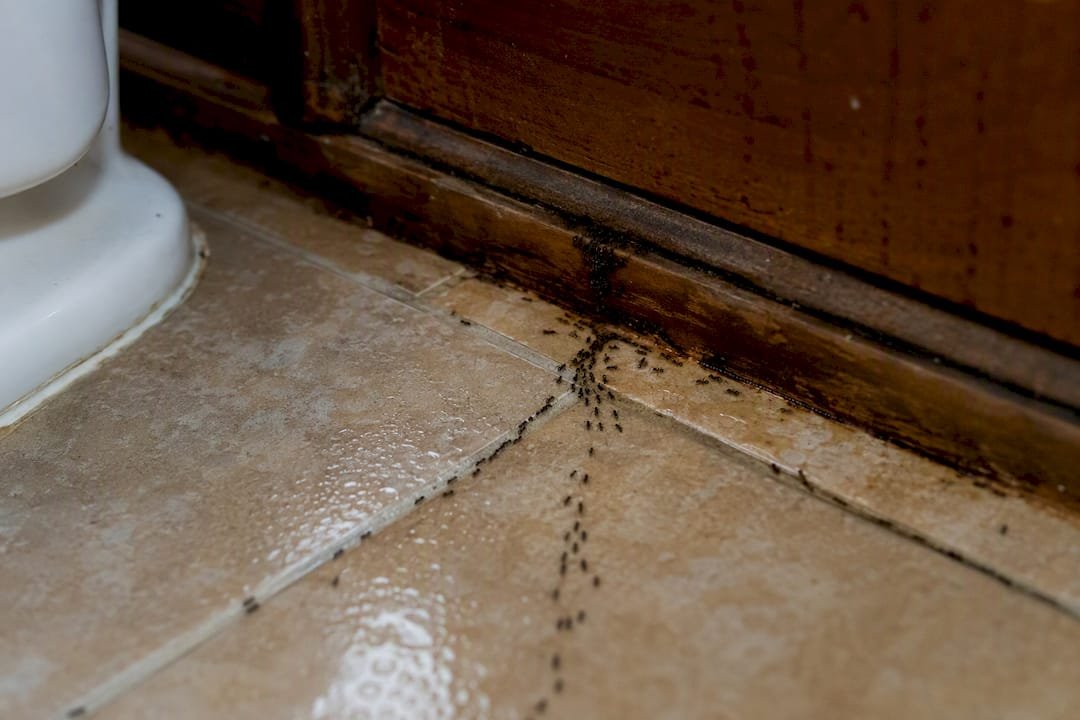
Following the trail backward is the single most useful thing you can do before deciding whether this is a weekend fix or a job for a professional. Watch where the line thins out and disappears. If it ends at a wall, a skirting board, a drain, or the toe-kick under the vanity, that’s your access point.
- Check under the sink: cabinet floor, pipe joints, and the shutoff valve are the top offenders.
- Check behind the toilet base and around the wax ring seal.
- Check shower and tub seals, grout lines, and the drain overflow hole.
- Bring a flashlight and a small mirror; a moisture meter helps if you own one, but even a fingertip test on suspect wood tells you plenty.
Sawdust-like frass, a musty smell, or a floor that feels slightly springy underfoot are signs of a bigger issue than surface moisture. For quick triage: small pale or yellowish ants suggest pharaoh ants, which need professional handling. Anything over 6 millimeters and black usually means carpenter ants, a possible structural signal. Small dark ants running to a drip almost always mean fix the leak and bait the trail.
Pro Tip: If two different trails converge at the same spot behind the vanity, that’s often a satellite nest location, not just a foraging path. Worth flagging in your notes if you end up calling a pro.
What actually gets rid of bathroom ants?
Baits beat sprays for one simple reason: ants don’t just die where you spray them, they carry the poison home. Non-repellent gel baits and liquid baits placed directly on active trails let foraging ants transport the active ingredient back to the nest, including to the queen, which is the only way to actually shrink a colony rather than just thinning out its scouts.
Boric-acid sugar baits are a solid low-cost DIY option when mixed at the right concentration and placed where pets and kids can’t reach them. Enzyme-based drain cleaners are worth adding to the routine too, since ants exploit the biofilm that builds up inside drains and overflow traps as a steady food source.
White vinegar has a real but limited role here. It scrambles the pheromone trail ants use to navigate, which buys you a day or two of confusion, but it doesn’t touch the colony itself the way a calibrated boric-acid or professional gel bait does.
What to avoid:
- Pyrethroid or “instant kill” aerosol sprays on the trail. They feel satisfying but risk fragmenting the colony, and with pharaoh ants specifically, spraying can trigger colony splitting and spread to other parts of the house.
- Treating essential oils as a permanent fix. They repel for a few hours at best and do nothing to the nest.
- Placing bait somewhere a curious toddler or pet can reach it. Tuck stations behind the toilet base or inside the cabinet, out of reach but still on the trail.
Expect days, not hours. A healthy bait program usually shows a visible drop in foraging ants within a week, with fuller colony reduction over two to three weeks.
How do you keep ants from coming back?
Prevention is mostly plumbing maintenance wearing a pest-control hat. Run through this checklist monthly, more often if your bathroom runs humid.
- Fix drips and leaks fast, and replace a failed wax ring or worn seal instead of caulking over it.
- Run the exhaust fan during showers and for another 20 to 30 minutes after; add a dehumidifier if the room stays damp regardless.
- Wipe down soap residue on tile and around the sink, and clean out toothbrush holders where sugary residue collects.
- Seal gaps with silicone caulk around pipe penetrations, and check window and door seals for wear.
- Inspect under sinks on a regular schedule; this is the single spot where moisture problems hide longest before anyone notices.
When should you stop DIYing and call a professional?
A few signs mean the bait-and-clean approach probably won’t be enough on its own. Large black ants over a small size threshold, sawdust-like frass along a baseboard, a floor that feels spongy or springy, winged ants appearing indoors, or a trail that comes back within days of baiting all point past the DIY stage.
- Carpenter ants often mean moisture-damaged wood somewhere nearby, which is a repair issue as much as a pest issue.
- Pharaoh ants need a careful professional protocol, since sprays can cause the colony to bud into several new colonies rather than dying off.
- A trail that keeps reappearing after a week of consistent baiting usually means there’s a satellite nest or a leak you haven’t found yet.
A proper inspection covers moisture assessment, targeted gel bait placement using non-repellent products, locating any satellite nests, and coordinating plumbing repairs where a leak is the root cause.
Timelines vary by species and how established the colony is, but a combined approach, baiting plus fixing the moisture source, generally resolves the problem faster than either step alone and cuts the odds of it coming right back. For structural concerns like moisture-softened wood, it’s worth comparing what you’re seeing against how white ants differ from termites, since the two get confused constantly and the fixes aren’t the same. If plumbing is the suspected culprit and you want a closer look before tearing into a wall, a sewer camera inspection can confirm a hidden leak without guesswork.
How do you set bait traps that actually work?
Placement matters more than product choice. Bait stations only work if ants find them on the way to wherever they’re already going.
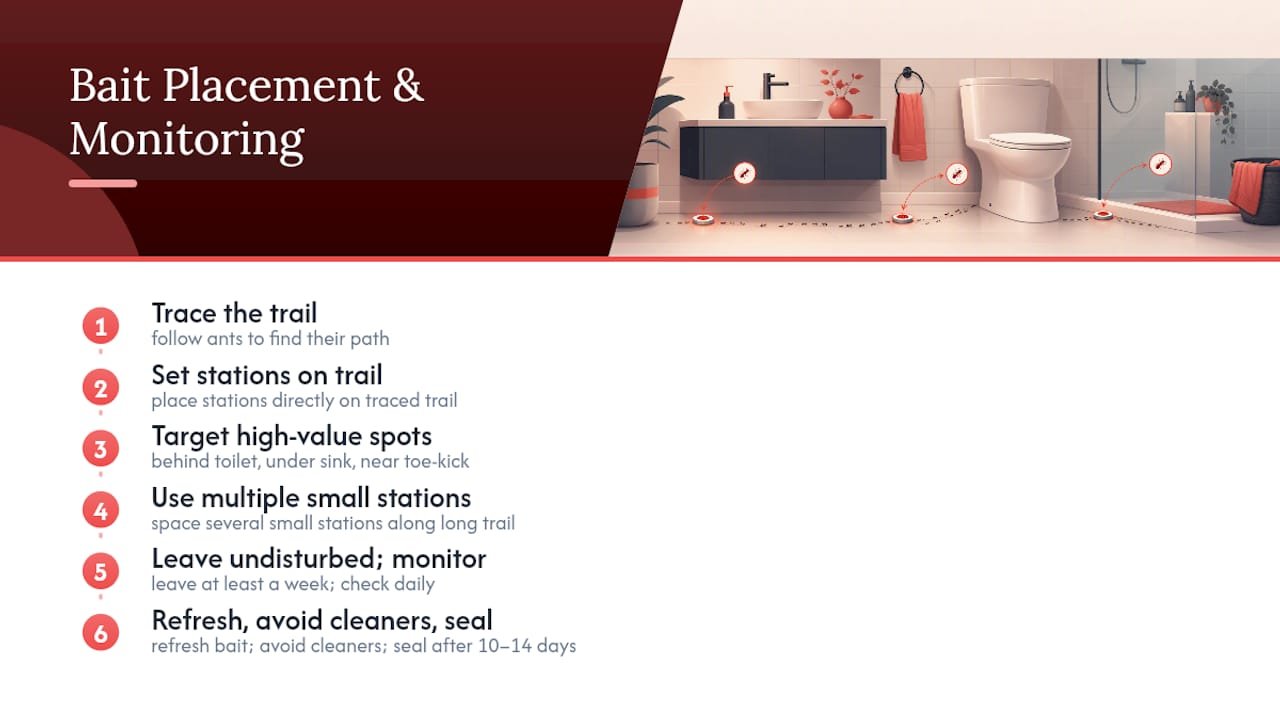
Set stations directly on the trail you traced earlier, not in a corner you think looks likely. Behind the toilet base, along the cabinet floor under the sink, and near the toe-kick where the trail vanishes are the highest-value spots. Space multiple small stations along a long trail rather than relying on one large station; ants are more likely to encounter several small targets than avoid a single obvious one.
Leave the station undisturbed for at least a week before judging it. Early on, you’ll often see more ants at the bait, not fewer. That’s the colony recruiting foragers to the food source, which is the sign it’s working, not a sign it’s failing. Check daily without moving the station itself; just note whether activity is rising, holding steady, or dropping.
Refresh liquid bait every few days since it can dry out, and replace gel bait if it hardens or gets contaminated with cleaning product residue. Keep cleaning products away from active bait stations entirely. A wiped-down station is a station ants won’t visit, which undoes the whole plan.
Hold off on sealing the entry point itself until you’ve seen a clear drop in activity, usually 10 to 14 days in. Seal too early, and you cut off the ants’ path to the bait before it’s had time to work through the colony.
Does your cleaning routine make ants worse?
Counterintuitively, an overly aggressive cleaning routine right where you’ve placed bait can undercut your own treatment. Wiping down every surface with a strong cleaner erases the pheromone trails ants use to find food, which sounds helpful, but it also erases the trail leading to your bait station before foragers can commit to it.
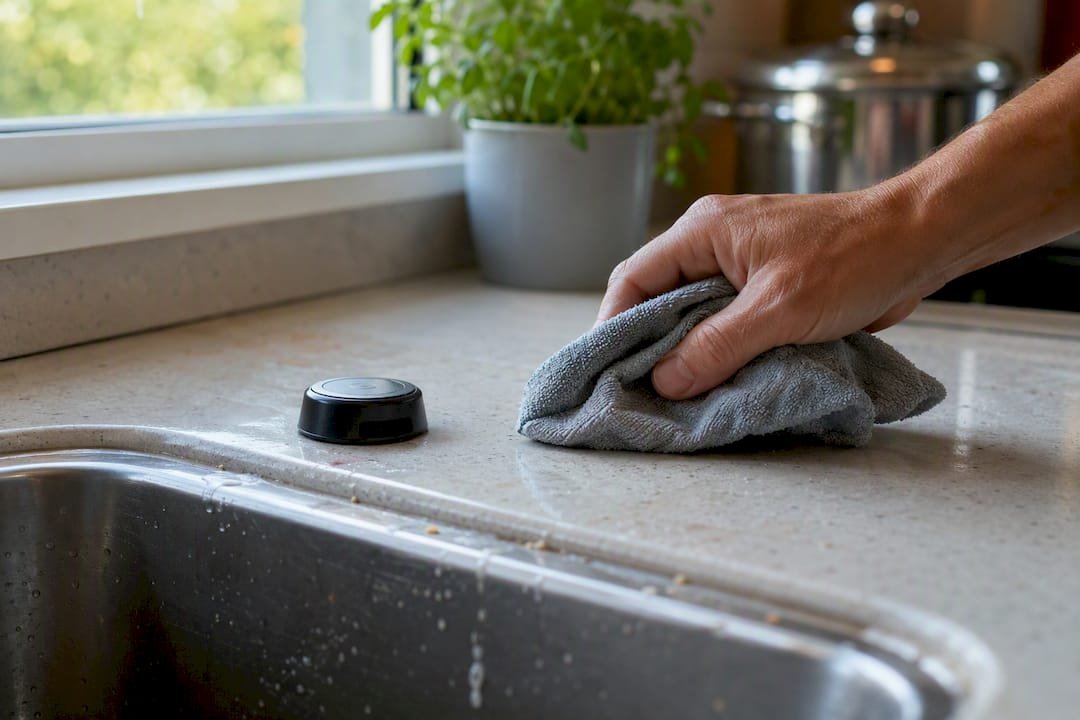
The better approach separates the two jobs. Deep-clean the rest of the bathroom, soap scum on tile, toothpaste splatter around the sink, hair and skin oils that build up near the tub, since these are the invisible food sources keeping a colony fed even when you can’t see obvious mess. But leave the specific area around an active bait station alone for the first week or two.
Daily habits matter more than deep cleans here. Wiping the sink basin dry after use, rinsing toothbrush holders weekly, and not letting standing water sit in the tub overnight all remove the resources that make a bathroom worth colonizing in the first place. Drains deserve the same attention: the biofilm that builds up inside a drain or around an overflow hole is a steady food source that a monthly enzymatic drain treatment can strip away, which helps even after the visible ant problem is gone.
Think of cleaning as two separate tracks running at once: starve the colony everywhere except the bait, and let the bait do its job undisturbed.
What pros wish homeowners understood
Killing the ants you can see rarely solves anything. The colony that sent them is usually still there, and it’ll send more scouts within days if the moisture source and food residue are untouched. The reliable path is boring: find the wet spot, bait the trail, and be patient.
Homeowners often want to seal the entry point the same day they spot the trail. Wait. Sealing too soon just cuts off the ants’ route to the bait before it has worked through the colony, and you end up back at square one a week later, confused about why nothing changed.
When it’s time to bring in BugsPatrol
DIY baiting solves plenty of bathroom ant problems, but not the ones tangled up with a hidden leak, a suspected satellite nest, or a species like pharaoh ants that punishes guesswork. That’s the point where Bugspatrol earns its fee: a licensed technician who can find the actual moisture source instead of chasing trails for another two weeks.
A booked visit starts with an inspection of the bathroom and any adjoining walls or cabinets, checking for the leaks, damp cavities, and access points a DIY inspection tends to miss. From there, our technicians place targeted, non-repellent baits or treatments matched to the species we find, give you written recommendations if a plumber needs to fix something structural, and schedule a follow-up to confirm the colony’s actually gone, not just quiet for a few days. For structural concerns, we also handle inspections tied to termite and moisture damage when carpenter ants suggest something bigger going on. If the ants keep coming back after your own baiting attempts, or you’d rather skip the trial-and-error entirely, get in touch through our general pest control services page and we’ll get a technician out to look at it properly.
Frequently asked questions about bathroom ants
Why are there ants in my bathroom if it’s clean?
Ants come for water, not mess. Condensation, drips, and damp wall cavities give them what they need even in a spotless bathroom.
How do I get rid of bathroom ants for good?
Clean the visible trail to erase pheromones, set gel or liquid bait directly on it, fix any leak you find, and seal the entry point only after bait uptake slows down, usually 10 to 14 days later.
Are ants around the sink a sign of a bigger problem?
Sometimes. Ants around the sink usually mean moisture in the cabinet or a pipe joint. If the trail keeps returning after baiting, or you see frass or a soft floor, it’s worth an inspection.
What’s the fastest treatment for bathroom ants?
Bait placed directly on an active trail, paired with drying out the room, gives the fastest visible drop in activity, usually within a week.
When should I call a professional instead of treating it myself?
Call a pro if you see large black ants over 6 millimeters, sawdust-like frass, a trail that re-establishes after baiting, or any sign the ants might be pale or yellowish, since pharaoh ants require careful professional handling.
Sources
- Why Are There Ants in My Bathroom? (NH 5-Species Guide) | Anchor Pest Services
- Ants Love Your Kitchen and Bathroom—Here’s How to Keep Them Out | Martha Stewart
- How to Get Rid of Ants | Serious Eats
- Bathroom ants: why are they there and how to get rid of them? – Pest Patrol
- Pests in the house: sink pests | PestWorld
Recommended
- Bugs Patrol Canberra – Professional Pest Control Services
- Bugs Patrol Canberra – Professional Pest Control Services
- Bugs Patrol Canberra – Professional Pest Control Services
- Bugs Patrol Canberra – Professional Pest Control Services