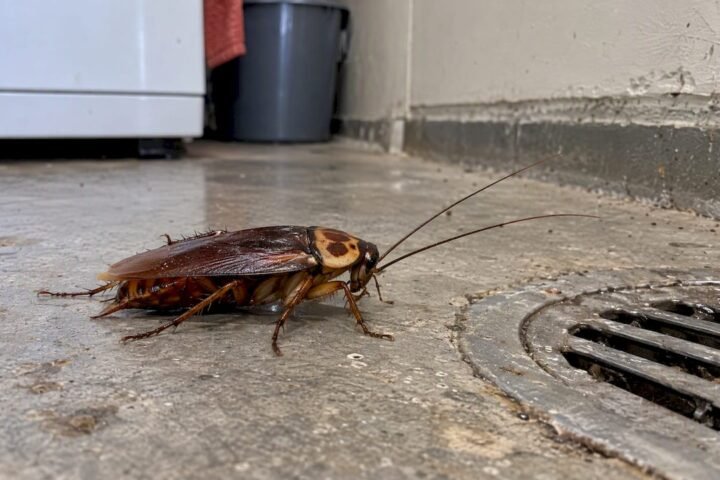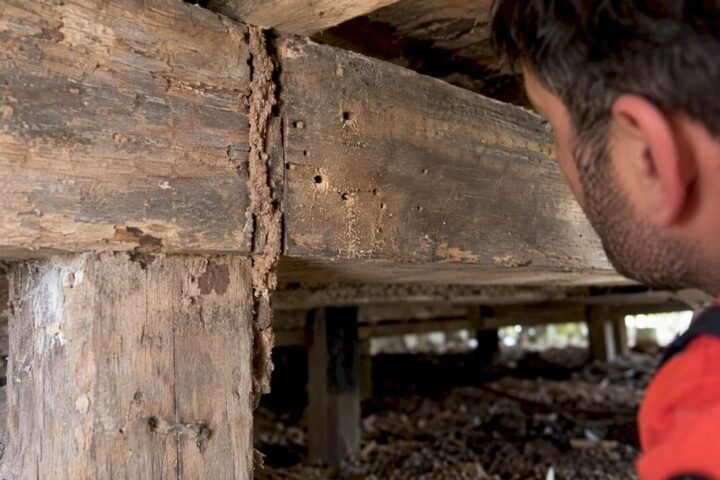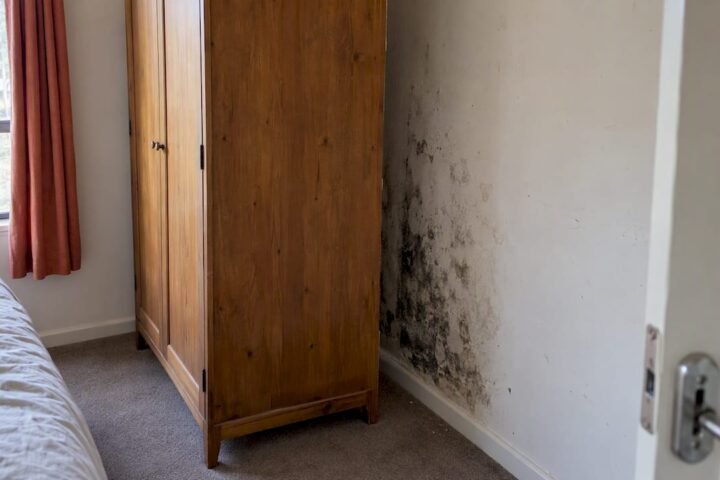
Keep timber and moisture away from the structure, inspect regularly, and maintain a compliant termite barrier: those three habits prevent most termite attacks. Moisture and earth-to-wood contact are the two things that draw termites to a property, so removing them cuts risk fast. Add a professional inspection at least once a year, since standard household insurance usually excludes termite damage, and you have a workable plan.
TL;DR:
- Physical and chemical barriers need regular maintenance and inspection to remain effective over the long term.
- Ensuring proper moisture control and removing earth-to-wood contact are the most cost-effective prevention methods.
- Homeowners should inspect external footings, sub-floor areas, and signs of activity every three to four months, with professional inspections annually.
- A licensed pest professional should be engaged for application of barriers, especially if there are signs of an active infestation or if complex treatments are required.
- Poorly placed or outdated treatments, as well as storing timber or mulch against foundations, undermine protection and can increase the risk of infestation.
Table of Contents
- A quick action checklist homeowners can use today
- Reduce moisture and remove termite attractors around the site
- Physical barriers, chemical systems, and building material choices
- What to check, how often, and the early signs to watch for
- When to call a licensed pest professional
- Keeping your protection valid over the long term
- Common mistakes and myths homeowners fall for
- A practical view on everyday termite prevention
- How a professional service can help with ongoing protection
- Sources
- FAQ
A quick action checklist homeowners can use today
You do not need a contractor for the first pass. A weekend spent on these fixes removes the easiest entry points and food sources termites rely on.
- Pull mulch and soil back so they sit below the top of the concrete slab or foundation.
- Keep timber, including garden edging and stored offcuts, off bare soil.
- Redirect downpipes and air conditioner condensate lines away from the foundation.
- Move firewood stacks away from the house and grind out old tree stumps to ensure safe timber and green waste removal Wood & timber waste removal | Melbourne City Rubbish.
- Trim shrubs and vines so they do not touch external walls.
If you spot mud tubes on footings, papery or hollow-sounding timber, or fine dust near skirting boards, stop and call a licensed technician rather than disturbing the area yourself.
Pro Tip: Photograph anything suspicious before you touch it. A dated photo helps a professional judge how active and how old the activity is.
Reduce moisture and remove termite attractors around the site
Termites need water and cellulose to survive, and removing those two things is the single most effective prevention step a homeowner can take. Most infestations trace back to a leaking tap, a blocked gutter, pooling water near the slab, or an irrigation line running too close to the wall.
- Check taps, hose connections and under-sink plumbing for slow leaks every few months.
- Clear gutters and confirm downpipes discharge well clear of the foundation.
- Regrade any soil that slopes toward the house so water runs away, not in.
- Keep mulch beds, garden edging and compost bins at least a few hundred millimeters from external walls.
- Set irrigation timers so garden beds near the house are not left saturated.
Landscaping changes such as raised garden beds, new paving or a deck can quietly create a bridge over an existing barrier. Before any of that work starts, talk to a pest professional or building certifier so the change does not undo protection that is already in place.
Physical barriers, chemical systems, and building material choices
A termite management system usually combines a physical barrier, a chemical barrier, or both, and the right mix depends on the building and the site.
- Physical systems such as stainless steel mesh, graded stone and exposed slab edges are durable once installed correctly, and an exposed edge makes future inspection easier because a technician can see activity without digging.
- Chemical systems create a continuous treated zone around the structure, applied as a trench, rodded application, or reticulation network built into the slab.
- Modern termiticides are less persistent than older chemistries, so these zones need periodic recharge or maintenance rather than a one-off application.
- Concrete, steel framing and treated timber reduce concealed risk compared with untreated timber built into or near the ground.
Termite management systems for many homes are required under building regulations, and installation has to meet the AS 3660 series referenced in the National Construction Code, with a durable notice recording what was installed. Our guide to termite barrier systems covers how these notices and maintenance intervals work in practice.
What to check, how often, and the early signs to watch for
Inspection is what keeps a barrier or chemical system doing its job over the years, and the routine is straightforward.
- Walk the sub-floor, skirtings, architraves and pipe penetrations every few months, looking for staining, soft timber or fine dust.
- Check external footings and the garden within roughly 50 meters of the house for mud tubes or termite trails.
- Log anything unusual with a photo and a date, even if it looks minor.
- Book a licensed inspection at the interval your local conditions call for, and sooner if you see active signs.
Industry guidance recommends professional inspections at least every 12 months, with homeowner visual checks every three to four months, especially around damp areas and sub-floor timber. Keeping that log matters beyond peace of mind: it becomes the record an insurer or a future buyer will ask for.
When to call a licensed pest professional
Some jobs are not DIY territory. Many termiticide labels restrict certain products as too hazardous for untrained use, and a barrier that is only half correct can be worse than none, since it can hide activity instead of stopping it.
A competent service should deliver:
- A diagnostic inspection using tools such as thermal imaging to find concealed activity that a visual check misses.
- A written report describing what was found and what was installed.
- A durable notice stating the system type, installation date and inspection interval.
- A clear maintenance schedule for any chemical component.
Ask a contractor how they document the notice and what happens if landscaping work later disturbs the treated zone. A vague answer, or no mention of a durable notice at all, is a red flag.
Pro Tip: A professional system still depends on you keeping mulch, soil and timber away from the treated zone in between visits.
Keeping your protection valid over the long term
A termite management system is only as good as its upkeep. The durable notice, usually fixed near the meter box, should record the system type, install date and recommended inspection interval, and this documentation is often required by building codes as a record for future owners.
- Confirm chemical systems are topped up or recharged on schedule rather than assumed to last indefinitely.
- Check exposed slab edges periodically for cracks or soil buildup that could bridge the barrier.
- Test reticulation systems to confirm they still function as designed.
- Get advice before any renovation, deck or paving project near the foundation, since new work can void an existing barrier if it is not planned around.
Our note on termite prevention for renovation and new-build stages covers what to flag with a builder before work starts.
Common mistakes and myths homeowners fall for
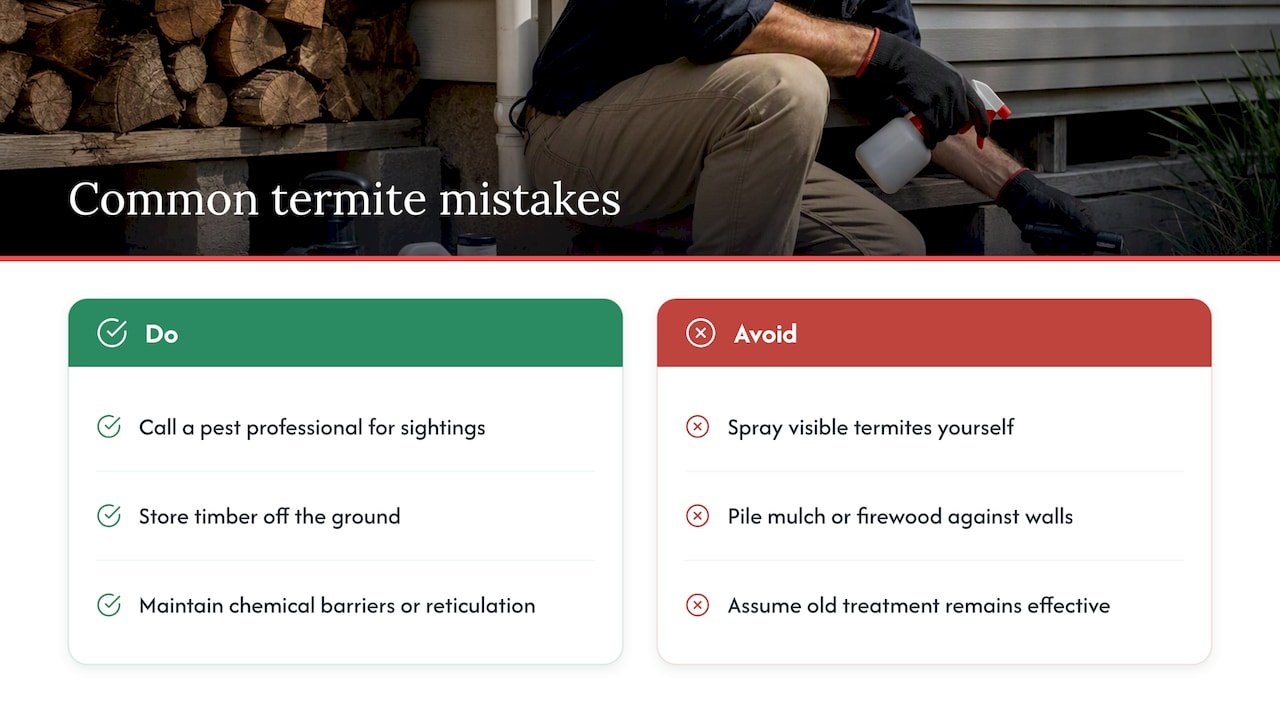
Spraying a can of insecticide on visible termites rarely reaches the colony and can scatter it, making a later professional treatment harder to plan. Piling mulch or firewood against a wall, or storing timber directly on soil, undoes moisture and access controls in a weekend. Ignoring the durable notice, or assuming a treatment from years ago is still active, is one of the more expensive mistakes: chemical barriers need maintenance or reticulation, not a single application, to keep working.
A practical view on everyday termite prevention
Fix moisture and site issues first: they cost little and remove most of the invitation. Leave barrier installation and chemical work to a licensed operator, since a poorly placed system can mask activity rather than stop it. Keep a simple log and stick to the inspection intervals, and the ongoing cost of prevention stays far below the cost of structural repair.
— navin
How a professional service can help with ongoing protection
Moisture control and a tidy yard handle a lot of the risk, but a compliant barrier and an accurate inspection call for the tools and licensing a technician carries. BugsPatrol Pest Management builds termite prevention into that gap.

- Termite inspections using thermal imaging to spot concealed activity early.
- Barrier installation and ongoing maintenance plans, including recharges where needed.
- A written report and durable notice provided after your inspection.
Booking a termite control service gets you an inspection, a clear report and a maintenance plan built around your property, or you can compare ongoing cover through the Bronze Termite plan.
Sources
- AEPMA notes on updates to AS 3660-2
- Termites: guidance from VBA
- Part 3.4 Termite risk management (NCC 2025)
FAQ
What can I put around my house to prevent termites?
Keep mulch, soil and garden beds pulled back below the top of your foundation, and store firewood and timber off the ground and away from walls. Fixing leaks, gutters and downpipes so water drains away from the house removes the moisture termites need, and a professionally installed physical or chemical barrier adds a further layer of protection.
What do termites hate the most?
Termites are not repelled by a smell or substance so much as denied what they need: moisture and direct access to timber. Removing water sources and earth-to-wood contact, and maintaining a compliant barrier, does more to stop them than any single deterrent product.
How can I prevent termites from infesting my house?
Combine site controls (moisture removal, no timber-to-soil contact, tidy landscaping) with a compliant termite management system and regular inspections. Industry guidance recommends homeowner checks every three to four months and a licensed inspection at least once a year.
What smell will keep termites away?
There is no reliable scent-based repellent that stops a termite colony from reaching a structure. Moisture control, removing cellulose debris and a proper barrier system remain the measures backed by pest management guidance.
Is professional termite treatment safe for pets?
Registered termiticides carry specific application and safety directions on their APVMA label, and licensed technicians follow those directions during installation. Ask your provider about the product used and any re-entry time before pets or children access treated areas.
Recommended
- Termite Control Amaroo
- Termite Control in Canberra
- Termite Control Specialist Canberra
- Termite Control Moncrieff