Inspect at least once every 12 months; more often when site conditions or past activity raise your risk. A qualified technician should carry out the inspection and leave you with a written report. High-hazard properties, including those near bushland or with a history of activity, often need inspections more frequently than annually.
TL;DR:
- Properties near bushland, with timber outbuildings, or recent renovations require inspections more frequently than annually, often every six months.
- Sites with higher termite pressure or conducive conditions, such as moisture or stored timber, should have shorter review intervals regardless of the last inspection date.
- A thorough inspection covers outdoor foundation zones, subfloor spaces, roof voids, internal timbers, and outbuildings, and must include a detailed report noting limitations and recommendations.
- Regular visual checks should be carried out year-round by homeowners and property managers to spot early signs like mud tubes, discarded wings, or new timber damage, triggering immediate professional inspections if observed.
- Pre-purchase inspections should occur before property settlement, with ongoing risk-based scheduling after acquisition for individual properties and portfolio management.
Table of Contents
- Recommended inspection schedule and practical examples
- Factors that should change inspection frequency
- What a professional termite inspection covers and what the report should show
- Homeowner and property manager interim checks and immediate triggers
- Pre-purchase inspections and commercial/portfolio programs
- Inspection frequency versus treatment frequency
- Practical delivery: what to expect from a licensed provider
- What an experienced pest manager wants you to know
- How BugsPatrol can help with inspections and ongoing protection
- Sources
- FAQ
Recommended inspection schedule and practical examples
The baseline comes straight from industry guidance: AEPMA’s Code of Best Practice states that regular inspections should be no more than 12 months apart, and QBCC echoes that annual minimum while flagging that high-hazard areas need tighter intervals. Think of it less as a single rule and more as a tiered system that matches inspection frequency to actual risk.
Most suburban homes with no history of activity and reasonable clearance from timber, mulch and moisture sources sit comfortably on the 12-month tier. Properties with elevated exposure, think older timber subfloors, nearby bushland, or a prior treatment, usually move to a 6 to 12 month tier. Properties under active chemical control or with confirmed recent activity typically require inspections more frequently than every six months while the situation is being managed.
A few quick examples make the tiers concrete:
- Suburban brick veneer house, slab on ground, no history: annual inspection fits the standard baseline.
- Rural property bordering bushland with timber outbuildings: six-monthly inspections given the higher local termite pressure.
- Unit within a managed complex, shared walls and gardens: annual inspection paired with the body corporate’s broader maintenance schedule.
- Recently renovated home with new paving against the slab: six-monthly inspection until the paving and barrier interaction is confirmed safe.
To pick the right tier for your own property, run through a short checklist: has there been any termite activity on the property or next door in the past five years, is there timber in contact with soil, is the building within a few hundred meters of a known termite habitat, and has there been recent construction, storm damage or paving work. Any “yes” is a reason to shorten the interval rather than wait for the next scheduled visit.
Factors that should change inspection frequency
A calendar date alone does not tell you much about termite risk. Several site and construction factors push a property toward a shorter interval regardless of what the last inspection found.
- Local termite pressure: regions with heavier termite activity, and properties near bushland or mature trees, carry higher baseline risk.
- Conducive conditions: moisture buildup, garden beds against the foundation, mulch, and stored timber near the house all attract termites and shorten the safe interval.
- Construction type and age: older buildings with timber subfloors or exposed slab edges are easier for termites to enter undetected than newer slab-on-ground homes.
- Recent changes to the property: storms, flooding, renovations or new paving can create bridges across chemical or physical barriers that were previously intact.
- Installer and chemical guidance: APVMA-registered termiticides carry a defined chemical life expectancy, and the installer’s documentation may specify an inspection interval tied to that product’s effective life.
The AS 3660 series is built around exactly this kind of risk-based thinking rather than a flat yearly rule, and it is worth treating any of the factors above as a trigger to call for an inspection sooner, not a reason to wait for the annual date. A termite barrier that was installed years ago under different conditions, for instance, is not guaranteed to still be intact after a major renovation that disturbed the soil around it. If your property fits more than one of these categories, use the shortest interval that applies rather than averaging them out.
What a professional termite inspection covers and what the report should show
A proper inspection is methodical, not a quick walk around the yard. It should cover specific zones and produce a document you can keep and refer back to.
- External perimeter and the 75 mm inspection zone around the foundation, checked for mud tubes, damage and conducive conditions.
- Subfloor areas, where accessible, looking at timber bearers, joists and any signs of moisture or termite workings.
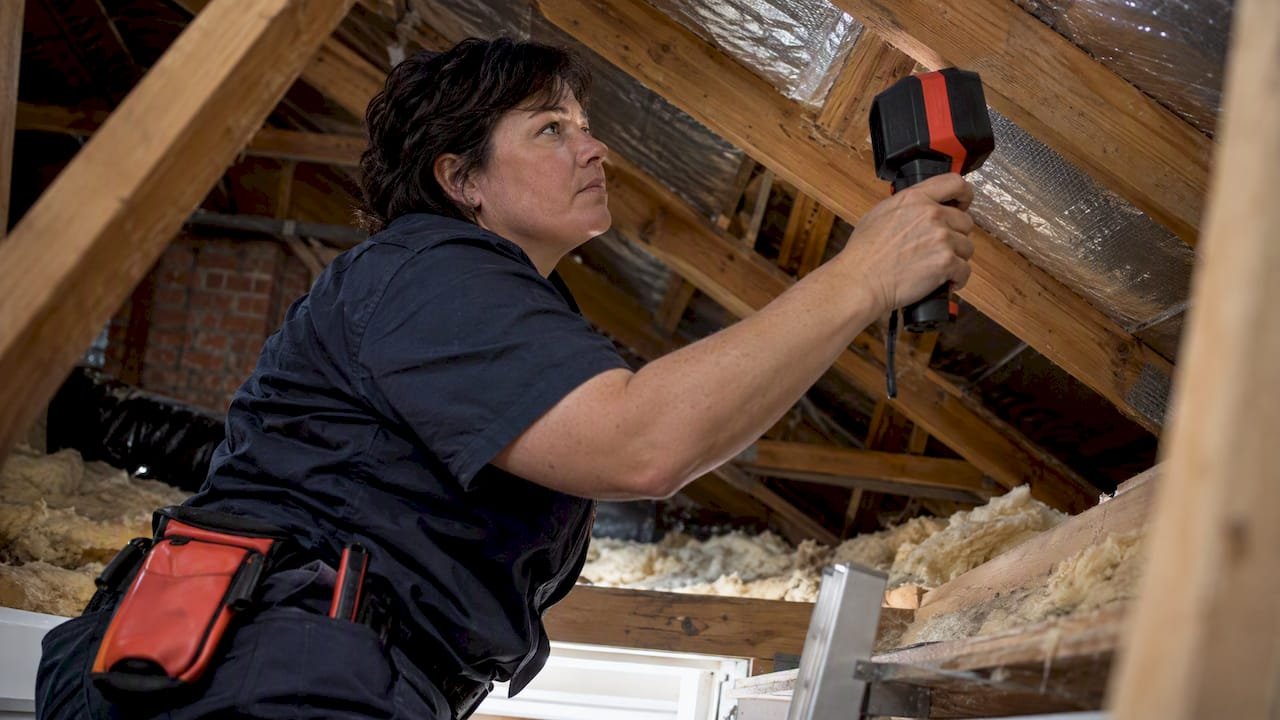
- Roof void, checked for damaged timbers, leaks and termite activity entering from above.
- Internal timbers, skirting boards, door frames and architraves, tapped and examined for hollow sections or damage.
- Outbuildings, fences and retaining structures, since termites often establish in these before moving to the main dwelling.
Regular inspections under AS 3660.2 are different from a special purpose inspection, which is typically used during active treatment or when a specific concern needs intrusive checking. A proper written report, required under the AEPMA Code, should record the inspection date, areas accessed, areas that could not be checked and why, findings, recommendations, and details of any existing termite management system including its installation date where known.
A licensed technician matters here because the report’s value depends on accurate identification, not just a visual scan. Common limitations, such as a garden bed blocking access to a section of wall, or paving that prevents inspection of a slab edge, should always be noted explicitly rather than left out of the report.
Homeowner and property manager interim checks and immediate triggers
Professional inspections cover the technical detail, but owners and on-site staff are the ones most likely to spot an emerging problem between visits. Victorian Building Authority guidance is clear that visual checks should continue year-round, since termite activity is often concealed and can progress significantly before the next scheduled inspection.
A monthly walk-through covering a few key spots takes little time:
- Check external walls and fence lines for mud tubes or soil trails.
- Look near windowsills and light fittings for discarded wings after warm, humid weather.
- Tap suspect timber and listen for a hollow sound.
- Note any unexplained moisture staining on walls, ceilings or skirting.
- Check stored timber, firewood piles and garden beds for contact with the house structure.
Pro Tip: Keep a simple log with dates and photos of anything you check, even when nothing looks wrong. It gives the next professional inspection a clear baseline to compare against.
Certain signs should never wait for the next scheduled visit: live termites, active mud tubes, fresh discarded wings, new damage to timber, or any sign of termite activity found after a storm. Book a professional inspection immediately in any of those cases. For more detail on what these signs look like in practice, see our guide to termite inspection signs.
Pre-purchase inspections and commercial/portfolio programs
Buying a property calls for a different kind of inspection than the ongoing annual check. A pre-purchase inspection under AS 4349.3 should happen before settlement, not after, and it answers a different question: not “is this property due for a check” but “what is the current condition and history of this specific property.”
- Arrange the pre-purchase inspection well before settlement so any findings can factor into negotiations; see our pre-purchase pest inspection guide for what this typically covers.
- After purchase, set a new recurring schedule based on the property’s actual risk profile and any existing termite management system documentation you inherited.
- For commercial buildings or managed portfolios, combine annual professional inspections with monthly visual checks carried out by on-site staff, a model supported by termite management technical guidance for facilities.
- Keep records centrally: inspection dates, noted limitations, barrier maintenance history and any corrective action taken, so the next inspector or facilities manager has full context.
Coordinating multiple specialist inspections across a portfolio is its own logistics challenge, and some property managers lean on scheduling services such as Local Pool Inspections for pool compliance or High Demand Electrical for pre-purchase electrical checks to keep every inspection type on a predictable cycle rather than managing each one separately.
Inspection frequency versus treatment frequency
Inspections and treatments answer different questions and run on different clocks. An inspection tells you whether termites are present or conditions have changed; a treatment removes or controls an infestation once it is found.
- Chemical barrier systems have a defined life expectancy on their APVMA label, and that life expectancy, not the inspection calendar, usually dictates when a full treatment or barrier recharge is due.
- Many barrier systems are designed around a multi-year cycle, often cited as roughly 5 to 7 years depending on the product and installation, after which retreatment is typically required.
- Warranties attached to installed systems frequently require regular inspections to stay valid, and skipping scheduled inspections can void that warranty even if no termite activity is ever found.
- During active control, special or intrusive inspections are used more often, AS 3660.2 points to intervals of no more than six months in these cases, to confirm the treatment is working as intended.
If you are weighing inspection against treatment needs for a specific property, our termite control services page breaks down what a treatment program typically involves once an inspection identifies a problem.
Practical delivery: what to expect from a licensed provider
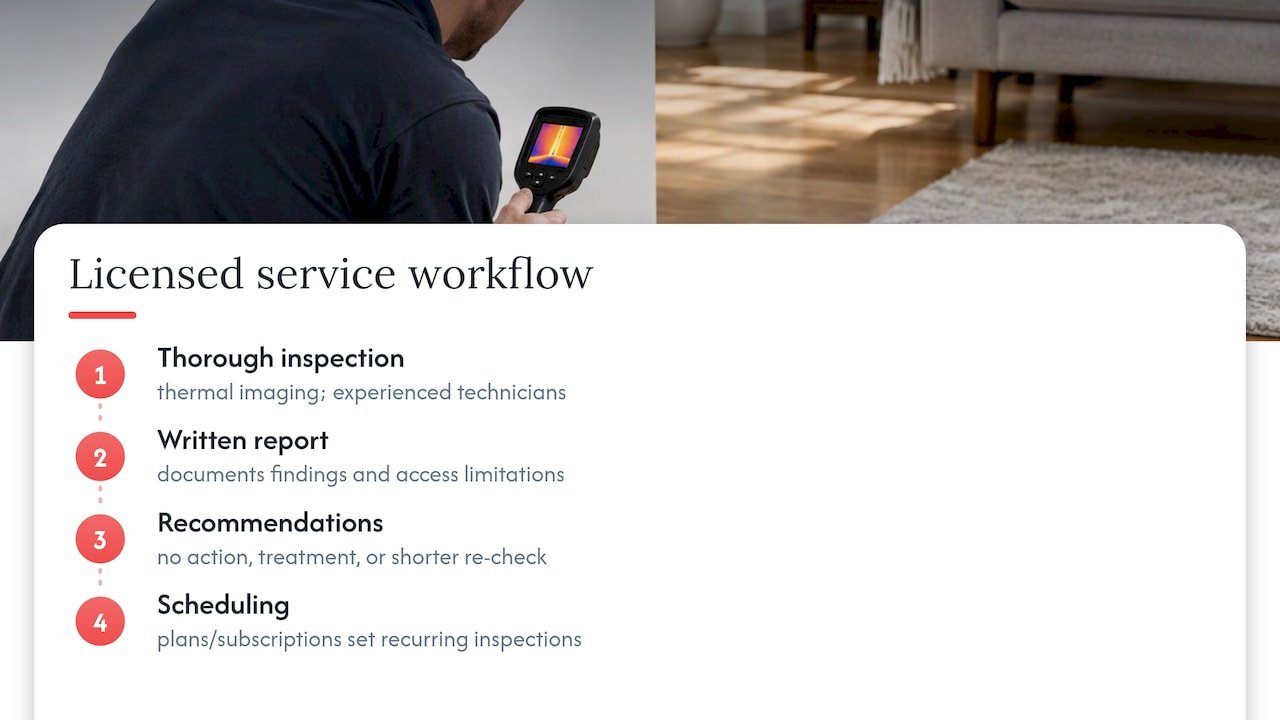
A proper termite inspection should feel thorough, not rushed. Licensed technicians use thermal imaging to help identify activity that is not visible to the naked eye, drawing on extensive experience and having worked across many Canberra homes.
A full service visit covers the inspection scope described earlier, a written report documenting findings and any access limitations, and clear recommendations for next steps, whether that means no action needed, a recommended treatment, or a shorter re-inspection interval. Scheduled plans and subscriptions help take the guesswork out of timing by building the next inspection into a recurring calendar rather than leaving it to memory.
What an experienced pest manager wants you to know
Annual inspections are the practical floor, not a target to aim for. Properties with any history of activity or obvious conducive conditions deserve a shorter interval, and waiting for a fixed date to roll around is how early signs get missed.
The easiest fix is a habit: set a calendar reminder tied to another annual task, like servicing your gutters or your air conditioning, so the inspection never slips. Keep whatever reports and photos you accumulate; they make every future inspection faster and more accurate.
— navin
How BugsPatrol can help with inspections and ongoing protection
Staying on schedule is easier when inspections are built into a plan rather than something you have to remember on your own. BugsPatrol’s termite services cover professional inspections using thermal imaging, termite treatments once activity is confirmed, and termite barrier installation and maintenance for properties that need a physical or chemical system in place.
- Termite inspections carried out by licensed technicians with a written report after every visit.
- Termite control and treatment for properties with confirmed activity, scaled to the system already in place.
- Scheduled plans, including Bronze Termite at $29.98 AUD per month, built around recurring subscriptions so your next inspection is never left to chance.
If your property falls into a higher-risk tier, or you simply want a professional opinion on where it sits, book an inspection through our termite control page and get a written assessment you can rely on for future planning.
Sources
- AEPMA Code of Best Practice for Termite Management (2025)
- Termites guidance (Victorian Building Authority)
- Protect against termites (QBCC)
FAQ
What is the standard for termite inspections?
The AS 3660 series governs termite management for new and existing buildings, while AS 4349.3 covers pre-purchase timber pest inspections specifically. Together they set out inspection scope, reporting expectations and the risk-based approach that underlies the 12-month baseline.
What is the best time of year to get a termite inspection?
There is no single mandated season, since the 12-month and six-month intervals from AEPMA’s Code apply regardless of month. Many owners schedule inspections after warmer, wetter periods when termite activity and swarming are more likely to leave visible signs.
How frequently should termite treatment be done?
Treatment timing depends on the specific barrier or chemical system installed, with many products designed around a multi-year cycle, commonly cited as roughly 5 to 7 years, tied to their APVMA label life. This is separate from inspection frequency, which should still happen annually or more often regardless of when the last treatment occurred.
How often should termite traps be checked?
Monitoring and baiting stations are generally checked as part of the regular inspection schedule, meaning annually at minimum or more often under AEPMA’s Code if the property is in a higher-risk tier. During active control, stations may be checked more frequently as part of a special inspection program.
Do I need a separate inspection before buying a property?
Yes, a pre-purchase inspection under AS 4349.3 is separate from ongoing annual inspections and should be completed before settlement. QBCC guidance recommends this step to identify existing termite management systems and any evidence of past activity before you commit to the purchase.
Recommended
- Termite Prevention for New Homes in Canberra
- Termite Damage Identification
- Common Termites in Canberra
- Termite Control in Canberra