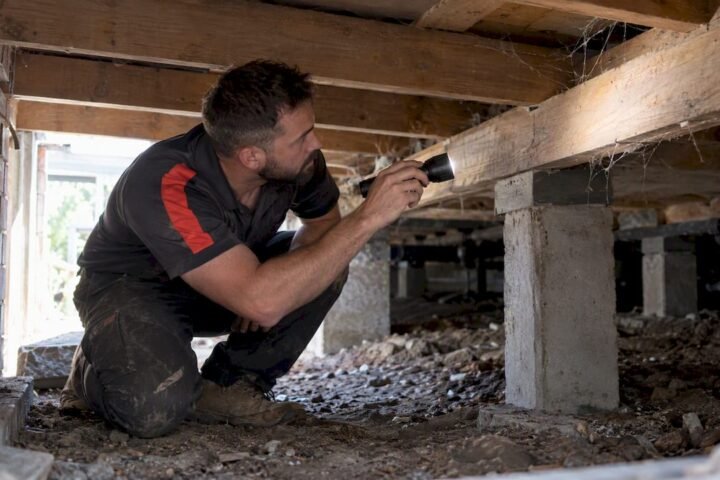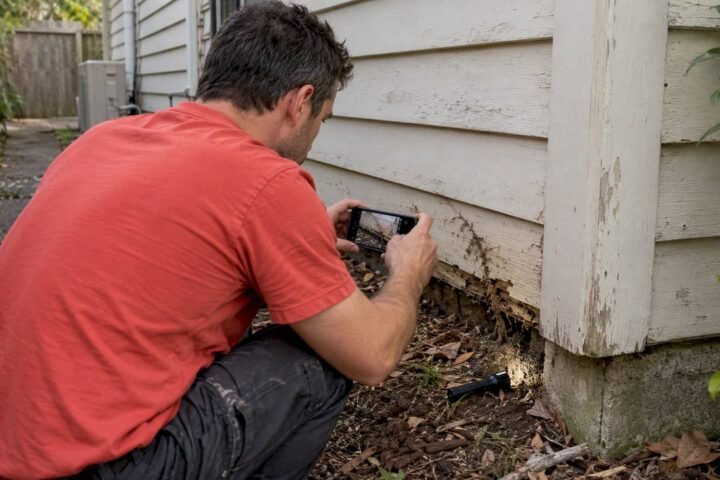
Yes. Pencil-width earthen tubes running up a foundation wall, pier, or skirting board are very frequently termite mud tubes, and they mean subterranean termites are likely active on your property right now. Do three things before you do anything else. Photograph the tube and mark its exact location. Break a small section, about an inch, only if you’re comfortable doing so, then leave it and check back in a couple of days. If the tube looks moist, thick, or connected to visible wood damage, skip the DIY step and call a licensed inspector. Groups like Mississippi State Extension treat shelter tubes on foundation walls as one of the most reliable field signs of infestation, and Bugspatrol sees the same pattern across the homes it inspects.
- Photograph and mark the tube location before you touch anything.
- Break a one-inch section only if it’s easy to reach safely, then watch for repair.
- Call a licensed inspector immediately if the tube is thick, moist, or near visible timber damage.
Key Takeaways
Pencil-width earthen tubes connecting soil to timber are usually termite mud tubes, and a repaired break within 48 to 72 hours confirms active infestation requiring professional treatment.
| Point | Details |
|---|---|
| Run the break-test first | Snap a one-inch section, mark it, and recheck in two to three days for repair or live termites. |
| Match tube type to urgency | Working and drop tubes signal high risk; thin exploratory tubes are lower priority but still worth monitoring. |
| Don’t scrape tubes clean | Removing evidence before inspection makes it harder for a technician to judge the colony’s scope. |
| No tubes doesn’t mean no termites | Colonies can stay hidden for years, so pair visual checks with a professional inspection. |
| Call Bugspatrol for licensed inspection | Bugspatrol offers thermal-imaging termite inspections and follow-up treatment across Canberra. |
Table of Contents
- What Do Termite Mud Tubes Look Like?
- Working, Exploratory, and Drop Tubes: What’s the Difference?
- Where Should You Check for Mud Tubes on Your House?
- Is a Mud Tube Proof of Active Termites?
- How Serious Is the Damage Risk, and How Fast Does It Happen?
- Found a Mud Tube? Here’s What to Do and Avoid
- What Happens During a Professional Inspection and Treatment?
- Staying Safe While You Check for Mud Tubes Yourself
- What a Technician Actually Looks for on Arrival
- Book a Licensed Termite Inspection
- Frequently Asked Questions
- Sources
What Do Termite Mud Tubes Look Like?
A termite mud tube is built from soil, chewed wood fibers, saliva, and fecal matter, packed together into a tunnel roughly pencil-width, usually between a quarter-inch and an inch across. The outside feels gritty and rough, almost like dried mud stuck to a wall. Snap one open and the inside is often smoother, sometimes with a hollow channel where termites travel back and forth.

Color usually matches the soil nearby, so tubes can range from pale tan to reddish brown, and they tend to darken when wet. Look for lines running vertically from soil to timber, sometimes branching like tree roots, climbing foundation walls, brick piers, or stumps. Active tubes often show what pest technicians call “traffic lanes,” faint interior tracks worn smooth by repeated movement. A moist, intact tube with soft walls usually points to current activity. A dry, crumbly one that collapses at a touch has probably been abandoned.
Pro Tip: Press a fingertip gently against the tube. If it’s pliable and slightly damp, treat it as active. If it flakes apart like old plaster, it’s likely old, but don’t assume the colony has moved on entirely.
Working, Exploratory, and Drop Tubes: What’s the Difference?
Not every tube carries the same weight. Working tubes are the sturdiest, ranging from a quarter-inch to a full inch thick, and they’re the main highways termites use to move between soil and a timber food source. Treat these as high risk.
- Working or utility tubes: Thick, well-maintained, actively used. Risk: high. Call an inspector without delay.
- Exploratory or migratory tubes: Thin, often under a sixteenth of an inch, fragile and frequently dead-end. Risk: low to medium. Worth monitoring, not panicking over.
- Drop tubes: Hang downward from overhead timber, reconnecting to the ground. Their presence often signals feeding happening above ground already, which points to a more advanced problem, according to a pest industry guide on termite tunnels.
A drop tube or a cluster of working tubes near a swarm site deserves a same-week phone call, not a wait-and-see approach.
Where Should You Check for Mud Tubes on Your House?
Start at the exterior foundation, particularly where brick veneer or cladding meets the soil line, and along slab edges and expansion joints. These are the highest-yield spots because they’re the shortest route from soil to your home’s timber framing.
- Foundation walls, piers, and stumps where soil contacts brick or concrete.
- Crawl space piers, floor joists, subfloor timber, and rim joists.
- Around plumbing or wiring penetrations, and where mulch beds sit against siding.
- Behind skirting boards, cupboard kickboards, and near any chronically damp interior wall.
If you’re heading into a crawl space, use a torch, wear gloves, and don’t crouch in a confined area alone. Leave deep or hard-to-reach checks to a technician with proper equipment.
Is a Mud Tube Proof of Active Termites?
A break-test is the fastest way to find out. Snap roughly an inch out of the tube, note the exact spot with tape or chalk, then leave it undisturbed.
- Break a one-inch section cleanly, without gouging surrounding wood or wall material.
- Check immediately for live workers, which look pale, soft-bodied, and light-sensitive.
- Wait two to three days and inspect the break again for fresh, moist repair material.
A tube repaired within 48 to 72 hours is strong practical evidence of an active colony. That said, an unrepaired break doesn’t clear the house. Termites often have alternate routes, and a colony can simply reroute around a damaged section.
- Don’t probe deep into wall cavities chasing termites; that risks structural damage.
- Don’t treat one negative test as a clean bill of health for the whole property.
- Do call a licensed inspector if the break-test is inconclusive or you’re not confident reading the result.
How Serious Is the Damage Risk, and How Fast Does It Happen?
Subterranean termites live almost entirely hidden, which is exactly why they build mud tubes in the first place: the tube shields them from drying out and from predators as they forage between soil and timber, as Utah State University Extension explains. That hidden lifestyle is what makes visible tubes such a valuable early warning.
A mature colony can number in the hundreds of thousands, sometimes over a million individuals, and an infestation can go undetected for one to eight years before anyone notices. That’s long enough for meaningful structural damage to accumulate quietly behind walls and under floors.
- Immediate: Active working tubes plus visible wood damage. Call today.
- Soon: Active tubes, no obvious structural damage yet. Book an inspection this week.
- Monitor: Dry, crumbly, apparently old tubes. Keep an eye on them, recheck seasonally.
No visible tubes doesn’t mean no termites. Plenty of active colonies stay entirely below ground or inside wall cavities without ever surfacing.
Found a Mud Tube? Here’s What to Do and Avoid
Photograph every tube you find and rough-map their locations on a floor plan or even a phone note. Run one small break-test on a single accessible tube, mark it, and leave the rest untouched for the inspector to assess.
- Do: Fix obvious moisture sources, like leaking taps or downpipes discharging near the foundation.
- Do: Clear gutters and move firewood or timber stacks away from exterior walls.
- Do: Remove any direct wood-to-soil contact you can easily access, such as stray timber offcuts leaning on brickwork.
- Don’t: Scrape away every tube before the inspection. It removes evidence a professional needs to assess scope.
- Don’t: Attempt large-scale DIY chemical treatments or dig extensive trenches around the foundation.
- Don’t: Assume a home remedy has eliminated the colony just because surface tubes disappear.
Scraping away active tubes doesn’t kill the colony behind them. Termites will often just rebuild elsewhere, sometimes in a spot you can’t see, which is why a targeted treatment aimed at the colony itself matters more than tidying up the visible evidence.
What Happens During a Professional Inspection and Treatment?
A licensed inspection typically covers the full crawl space and foundation perimeter, probing suspect timber, tracing tubes back to their soil entry point, and taking moisture readings throughout the property. Technicians often use a screwdriver to probe for hollowed-out galleries in timber, sometimes paired with thermal imaging to spot temperature differences that suggest hidden activity.
- Full visual inspection of foundations, crawl spaces, and accessible timber.
- Probing and moisture testing at suspect areas, with photo documentation throughout.
- A written report outlining findings, mapped tube locations, and a recommended treatment plan.
Treatment options generally fall into three categories, and which one fits depends on the scope of activity your inspector finds.
- Liquid soil barriers: A chemical zone around the foundation that termites can’t cross undetected.
- In-ground baiting systems: Stations placed around the property that termites feed on and carry back to the colony.
- Localized spot treatments: Injections, foams, or dusts aimed at a specific active area, often paired with structural or moisture fixes.
A solid report should also spell out warranty terms and a follow-up inspection schedule, not just a one-time treatment date. Bugspatrol’s guide to termite barrier systems breaks down how liquid and physical barriers actually get installed around a typical foundation.
Staying Safe While You Check for Mud Tubes Yourself
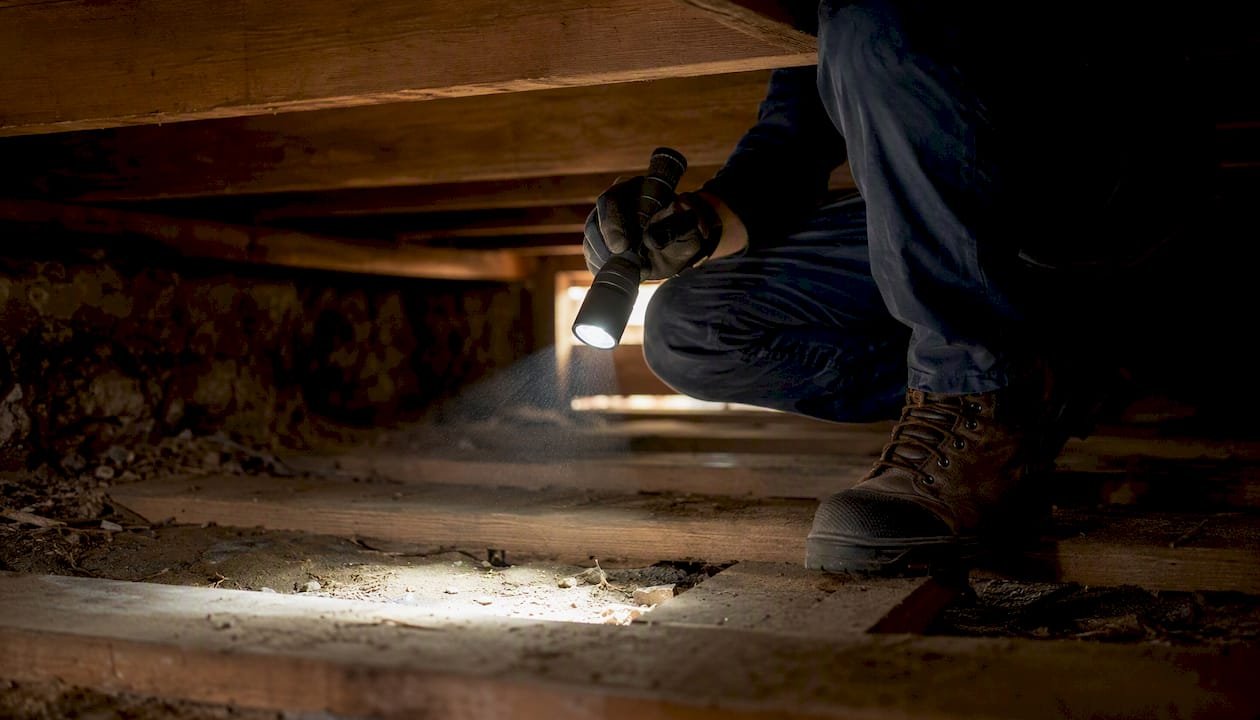
A little caution goes a long way here, because most termite-related injuries have nothing to do with the termites themselves. They come from awkward crouching in tight crawl spaces, torches with dying batteries, or people reaching into damp, poorly lit cavities without gloves.
Wear closed shoes and gloves any time you’re inspecting foundations, subfloor areas, or timber piers, and bring a proper torch rather than a phone flashlight. Crawl spaces can hide loose insulation, exposed wiring, or sharp debris, so move slowly and check your footing before putting weight down. If a space is too tight to turn around in comfortably, don’t push further in alone; that’s a job for someone with the right gear and a second person aware of where you are.
When you do a break-test, use a flathead screwdriver or similar tool rather than bare fingers, and avoid gouging into surrounding brick or render, which can create moisture entry points of its own. Skip any area near exposed electrical fittings, damaged flooring, or standing water until a professional has assessed it. If you’re dealing with a two-story foundation pier or a roof-adjacent drop tube, that’s not a DIY job at all. Ladders and elevated timber inspections carry their own fall risk, and a licensed technician has the harness gear and experience to do it properly.
None of this is about being precious. It’s about making sure a quick check for mud tubes doesn’t turn into a trip to the emergency room over something as avoidable as a fall in a dark crawl space.
What a Technician Actually Looks for on Arrival
Walking into a job, the first thing I check is whether the tubes are still intact or whether the homeowner has already scraped them off the wall trying to be helpful. That single habit, scraping active tubes before anyone’s inspected them, is the most common mistake I see, and it wipes out evidence I need to judge how far the colony has spread.
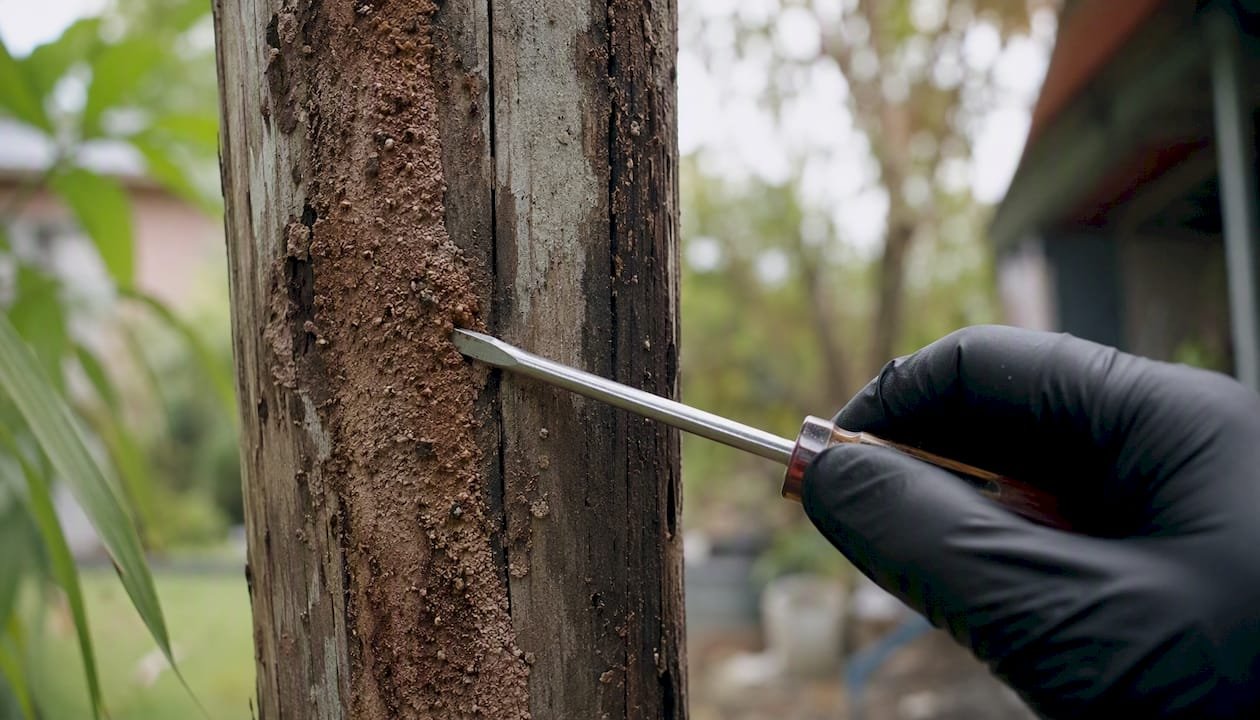
What reassures most homeowners is realizing an inspection isn’t invasive or destructive. It’s methodical: probing timber, checking moisture, tracing tubes back to soil, then writing it all down. Bugspatrol’s inspectors use thermal imaging on top of the standard checks, which catches activity hiding behind plaster long before it becomes visible damage.
Book a Licensed Termite Inspection
If you’ve found tubes and run your own break-test, the next move is getting a licensed set of eyes on the property before the colony does more damage. Bugspatrol runs full termite inspections across Canberra using thermal imaging alongside standard probing and moisture checks, so hidden activity behind walls or under flooring doesn’t get missed the way it can with a visual-only check.

Before your visit, take photos of every tube you’ve found, mark their locations, and clear access to crawl spaces or subfloor areas where possible. A typical inspection covers the full foundation perimeter and comes with a written report detailing what was found, where, and what treatment fits the scope, whether that’s a liquid barrier, a baiting system, or a localized spot treatment. Bugspatrol backs its termite work with follow-up monitoring, so it’s not a one-and-done job. Visit the termite control specialist page to check availability or book an inspection directly, or browse general pest control services if you want broader property protection at the same time.
Frequently Asked Questions
Do termite mud tubes always mean an active infestation?
Not always. A moist, intact tube usually means termites are actively using it, but a dry, crumbly tube may be old. Either way, a professional check is the only way to know for sure whether the colony is still active.
Can I remove mud tubes myself once I’ve found them?
Leave most tubes intact until after an inspection. Scraping them off doesn’t kill the colony behind the wall, and it removes evidence a technician needs to judge how widespread the activity is.
How long does it take termites to cause serious damage?
It varies widely, but infestations can go unnoticed for years while a colony grows, so the timeline between first tube and real structural damage depends heavily on colony size and how quickly it’s caught.
What’s the difference between termite tubes and mud dauber wasp nests?
Termite tubes always connect back to soil and have a gritty, earthen texture, while mud dauber nests sit above grade and never touch the ground, which is the quickest way to tell them apart.
Sources
- Signs of Termite Infestation — Mississippi State Extension
- Subterranean Termites factsheet — Utah State University Extension
- Identifying and Detecting Termite Infestations — Virginia Tech Extension
- Mud tubes on a wall: Termites or mud daubers? — Woodworking Advisor
Recommended
- Bugs Patrol Canberra – Professional Pest Control Services
- Termite Control Phillip – Bugs Patrol Pest Management
- Termite Control Mawson – Bugs Patrol Pest Management
- Termite Control Casey – Bugs Patrol Pest Management